Showing posts with label Greece. Show all posts

Wednesday, 16 November 2011

Greece 2011, Athens and the Varvakios Agora (Central Market)


On the last day we deliberately woke early because we wanted to return to the busy commercial street close to the hotel and visit the central market called the Varvakios Agora which was only a hundred metres or so away and housed inside a huge building with a dangerously crumbling facade that looked as though it might catastrophically collapse into the street at any moment.

It was still early and the market was barely open but we dodged inside alongside the delivery vans and the first few customers of the day and went first to the hall of the butchers. This was as far away as it possible to get from the sanitized, styrofoam, plastic wrapped supermarket meat that we are familiar with in the United Kingdom. You can’t pretend that these cuts don’t come from an animal when the entire skinned body is hanging in front of you! It smelled authentic as well as the aroma of fresh flesh, blood and offal just filled the air and butchers in scarlet stained aprons attended their stalls and invited us to inspect the merchandise. We looked but explained that we wouldn’t be buying because Easyjet might have had something to say if we tried to take a sheep’s head or a goat’s carcass on board the plane later today in our hand luggage.

We made our way into the seafood section with seawater an inch deep sloshing over our sandals so that we had to pull up our trousers so that they didn’t get drenched at the bottoms. For sale here was just about every conceivable fish in the oceans, ranging from the smallest of sea creatures to massive shark and tuna steaks as well as nearly every possible variation of sea floor dwelling crustacean, mollusc or bivalve known to man. It wasn’t like the fishmonger stall at Morrison’s that’s for certain!

On the streets outside the market there were untidy little shops, just kiosks really, selling fruit and vegetables, cheese, olives, nuts and herbs and spices and whilst we couldn’t really transport meat, fish or cheese, we did purchase some little bags of spices to take home and after the transaction was completed I began to worry about taking these little multi-coloured bags of suspicious looking powder through customs later this morning.

The whole of Athinas Street was rather run down but was full of character and vibrancy with roadside kiosks, shoe shops, bakeries, coffee bars, army surplus stores, pet shops, each with a menagerie of animals, and hardware stores. All of the shops were preparing for the day’s trading – transferring stock outside onto the pavements where it would stay for twelve hours or so collecting dust and grime from the traffic along this busy street before the displays would be dismantled and taken back inside overnight. This was the beating heart of Athens in contrast to the tourist main shopping street of Ermou or the overpriced flea market at Monastaraki and we liked it.

There wasn’t a lot of time to hang around however so we returned to the hotel for our breakfast and then we packed our bags, checked out and paid the bill and walked back along Athinas and Ermou towards the airport bus stop at Syntagma. Even at half past eight in the morning the sun was flooding the street with bright light and heat and we were forced to walk in the shade so that we didn’t get too sweaty as we carried and pulled our bags.

We were taking the bus once more because we still weren’t too confident about using the metro and we were a bit edgy again but we needn’t have been because the one hour journey to the airport inevitably passed without incident and by mid morning we were checked in and in the departure lounge and ready for our four hour flight back to Manchester.

We had enjoyed our fifth back packing adventure to the Greek islands in as many years, we had returned to some old favourites, Ios, Antiparos and Katapola and added some new islands to our travelogue, Koufonisia, Paros and Egalia. We had had a wonderful time and we had been fortunate to miss the strikes and the travel disruption but as we waited we agreed that next year we just might do something different!


Friday, 11 November 2011

Greece 2011, Antiparos


The hotel Kastro was excellent, we had stayed there before and had requested the same room but the owner insisted on upgrading us at no extra cost to a superior room and we were not going to argue with that!

In the morning we had an excellent breakfast under a gazebo in the garden where we planned a leisurely day in and around the village and the beaches.

We walked down what I suppose was the main street with plastic bollards to stop vehicles passing but which delivery vehicles simply ignored and drove straight over anyway, past quaint old mini-markets and twisting streets running in every direction and local women sitting chatting to their neighbours in front of the doors to their houses as they have done forever.

The main town of Kastro is a traditional Cycladic settlement, full of whitewashed cubic houses with little flowered balconies and blue painted doors and windows. My favourite doors are in the Cyclades where, next to the white that we all associate with the islands, the prevailing colour is blue. It turns out that the widespread use emanates from an ancient belief that the sky-blue shade of turquoise has the power to keep evil away. It is believed that the radiation of the colour composes a sort of invisible shield, which prevents the approach of bad spirits. Blue is used everywhere in the Cyclades, church cupolas, windows, doors, walls, staircases, fences and also as blue ‘belts’ around buildings, which supposedly provide protection against evil.

The road took us down to the harbour and we walked around it and to a gritty beach that was lined with armirikia trees with whitewashed trunks that provided welcome shade from the hot sun and we sat for a while and dangled our feet in the cool water. About an hour on a beach is more than long enough for me so just before boredom clicked in we left and wandered back to the village along the harbour side where there was a sudden frenzy of excitement when a fisherman landed a huge fish and set about gutting it and preparing it for the dinner table there and then by the side of the road.


On the way back we visited the ancient kastro that has a quaint but neglected mix of houses, some inhabited but others abandoned and crying out for refurbishment. There were some little shops and a folk lore museum that didn’t take long to look around and by mid morning it was time for a first mythos of the day and after that we ambled back to the hotel for a swim in the pool and a drink on the terrace. The terrace was blue of course with tubs of neglected geraniums, a crooked olive tree and pink bougainvillea tumbling down from overhead trellising.

While we sat and read our books on the balcony of the room the only thing to disturb us was the constant calling of the cicadas which are at their most noisy in the heat of the day. Apparently a single insect can achieve a sound level of one hundred and twenty decibels which is the equivalent of a pneumatic drill or a chain saw which is a very impressive ratio of sound to body weight. A human shouting like that would probably sound like Krakatoa erupting and the only man who can get remotely close to this is Brian Blessed.

There was happy hour at the poolside so before we went out in the evening we took advantage of that and after the sun disappeared walked all the way back down to the harbour, which was busy again. In the morning the little town seemed to have an end of season quietness about it but by the evening it had really livened up and restaurants, tavernas and chic boutiques had all opened their doors for business and the main street had a sense of vitality about it.

Anti-Paros felt very cosmopolitan and with no riff-raff about it felt just a little bit special. We poked around the shops but I have to admit that I do not have the same amount of enthusiasm as Kim for sparkly things on chains, baby clothes or sun tops and so quickly became bored. Kim sensed this of course and so we moved on and found a seat at the same taverna on account of the fact that we had really enjoyed it there the night before.


Tuesday, 8 November 2011

Greece 2011, Ios to Antiparos


Although we were travelling to Antiparos today the ferry wasn’t due to leave until very late afternoon so we had most of the day ahead of us to spend on Ios. After our final breakfast with more delicious figs we packed our bags in preparation for later departure and then walked to the harbour.

This morning we walked to the white sentinal church on a headland overlooking the harbour, the church where we had been a couple of nights earlier to the wedding and the christening and the church where we walk to everytime we stay on Ios. Usually there is a reason for this because we are beginning the walk to Valmos Beach a couple of kilometres further on to see the naturists but today we had no such intention so it was a rather unneccessary thing to do. We have photographed this church from every possible angle and captured every single detail but Kim wanted to go again just in case there was the remotest possibility that we had missed something on the previous five visits.

There wasn’t of course and after we had eventually satisfied ourselves on this point we walked back down the harbour, past the campsite that was now closed for the summer, the Carrefour supermarket, the swanky boats rolling around on their moorings and clinking their masts like ouzo glasses and back to the village where we spotted Martin at the Octopus restaurant and joined him for a while and shared a Mythos moment.

Eventually we left him there and walked along the blue flag beach and paddled in the shallow water at the edge of the sand. I imagine this beach gets busy in summer but it was only sparsely attended today and there was plenty of space for everyone including Lisa who we came across sunbathing in a Robinson Crusoe sort of way far away from everyone else. The season was coming to an end on Ios, the clubs and discotheques were all closed and the hotels were beginning to dismantle their beachside sunshades and put away their loungers for the winter and there was almost a sense that they would be glad when it was all over and the final ferry took the last holidaymaker away from the island.

We didn’t make the mistake of going for lunch today but walked back up the hill to Homer’s where we spent the rest of the afternoon around the pool drinking, chatting and taking the occasional swim in the hot afternoon sunshine. But soon it was time to leave so we said our goodbyes, did our final last minute packing and, under pressure from Kim, I agreed to dispose of my favourite blue tee shirt. I had had it since 1995 and it had been to Greece with me thirteen times but I had to agree that it was showing extreme signs of wear now so I thought the Greek islands was the appropriate place to leave it!

It was a High Speed ferry to Paros so it only took a little over two hours to reach Paroikia but at eight o’clock it was dark and busy and we couldn’t find the passenger ferry to Antiparos just around the corner so we had to take a fifteen minute bus journey to an alternative car ferry which left at eight-thirty and got us across to the small island off the west coast of Paros in just a few minutes where we were met by the owner of the Hotel Kastro and driven to our last accommodation on the islands for this year.

From a previous visit in 2008 we knew where we wanted to eat but three years later and in the dark we just couldn’t find it so when we came across somewhere similar we changed our plans and ate there instead. The food was excellent but we had the slight misfortune to sit on a table next to a large party of French folk and whilst this wasn’t a problem in itself what was irritating was that they seemed to be in a sort of who caught smoke the most cigarettes competition and although the tables were semi outside the acrid smoke kept blowing across out table whenever they lit up. To compensate for this irritation it made me smile when I overheard that they had to order their meals in English – I bet that stuck in their throats as much as their foul smoke collected in my nostrils!

At the end of the night, after our excellent meal we were about to leave when two of the waiters suddenly appeared with bouzoukis and started to entertain with the first instantly recognisable chords of Zorba the Greek. We couldn’t possibly leave now so we switched tables away from the drifting smoke, ordered a second carafe of red wine and stayed for another forty-five minutes or so to watch the show and finally when it was all over we left and made our weary way back to the hotel.


Sunday, 6 November 2011

Greece 2011, Rugby World Cup and a Baptism


After an early night we woke soon after sunrise so with an hour or so to wait until breakfast we walked down to the harbour to check ferry times and watch the place starting to prepare for the day ahead and then returned to Homer’s for breakfast on the terrace.

I wouldn’t normally watch TV while on holiday but was prepared to make an exception today because England were playing Argentina in the Rugby World Cup and it was being shown at a bar in the village at eleven o’clock so we made arrangements to meet Martin and Lisa there and then went for a walk to the village for an hour or so before it started.

We walked to the top and admired the views of the port and on the way down stopped to talk to some fellow travellers. As we exchanged stories I saw what I thought was a lizard but quickly realised that it was a snake. Olive brown and about a metre long it slithered by and disappeared into a tiny crack in the steps. Later I asked Antonia who was surprised to hear of a sighting in the town and told me that a local naturist had reintroduced these serpents to the island and that they were poisonous. I am all for preserving the natural environment but that is just plain daft, as daft as Eugene Schieffelin introducing the starling into the USA or Thomas Austin releasing rabbits into the Australian outback. Daft also because although there is a medical centre on Ios for anything serious the only treatment is on the mainland and a snake bite would mean airlifting by ambulance back to Athens.

We walked around the steep and narrow streets and alleys to the windmills and through the shops that line the main street through the village and back to the main square and the sports bar where we duly watched England kick off their world cup campaign with a nervous and unconvincing victory against the South Americans. When the match was over we returned to Homer’s down the dusty track and after a short sojourn went for another walk to the harbour and along the coast road to the little church on the headland.

The road out of the village runs past the business end of the harbour and there were some brightly painted boats that had just landed their overnight catch and were negotiating sales with local people and restaurant owners in a babble of animated activity. It looked like a good night’s work and the trading was brisk. The fish looked interesting and on closer examination of the produce it soon becomes clear why we have to put up with stock shortages whilst the most of the rest of Europe have such an abundance of choice; we are just far too fussy about what we will eat and our preference for fish is restricted to two or three species that we have fished into crisis and near extinction whilst in Greece, as elsewhere, they will eat a much greater variety of sea food. We like to buy our fish in little blue polystyrene trays without heads, tails or entrails and ready for the frying pan but here the trays were brimming with fish so fresh that it was still alive and flapping about and winking at the prospective purchasers who were examining it.


On top of the church there was a Greek flag that was flapping uncontrollably in the wind and trying desperately to separate itself from the pole that was hanging onto it. The blue and white flag of Greece is called ‘Galanolefci’, which simply means ‘blue and white’. Originally it was blue with a white diagonal cross but the cross has now been moved to the upper left corner, and is symbolic of the Christian faith. Being a seafaring nation, the blue of the flag represents the colour of the sea. White is the colour of freedom, which is something that is very important to the Greeks after years of enslavement under foreign domination. The nine stripes of the flag each symbolise a syllable in the Greek motto of freedom: E-LEY-THE-RI-A-I-THA-NA-TOS, which translates literally into ‘Freedom or Death’.

There were preparations at the church for a wedding and a christening and later Kim returned to see the wedding and I joined her later for the baptism to see the ceremony of a little girl being accepted into the Christian Orthodox Church, which is a major event in the life of any Greek family. A Greek baptism is a sacred and religious rite that is performed on a baby to cleanse the soul and renounce Satan. The baptism is a complex initiation that starts with an exorcism and officially ends forty days later when the baby is presented to the congregation to receive Holy Communion.

Unfortunately we weren’t able to stop for the full forty days and we began to feel a bit like intruders on a private family event so before it was all over we left the church and returned to the harbour and instead of going to the Chora, tonight we ate next to the fishing boats that were being prepared for another night at sea at a place called the Octopus where, at pavement tables next to the fishermen, we were served excellent food and we were left wondering why we had always insisted on going back to the Mills restaurant on all of our previous visits.


Saturday, 5 November 2011

Greece 2011, Koufonisia to Ios


If we had taken any notice of the Canadian lady’s story about gales and worried about it at all then we needn’t have done because when we woke to our last day in Koufonisia there was no wind at all, the sun was shining and the prospects were good for a perfect day.

Over a simple breakfast we watched the French neighbours hanging out the washing and making sure that all of the socks were hung in neat pairs and with heels facing the same way and after that he squeezed a dozen oranges to make a breakfast drink in such a careful and loving way that he almost turned it into an art form. She appeared earlier than normal but went straight for the laptop and the mobile phone.

It was a lunch time ferry to leave the island and we had a last morning to spend in Koufonisia so we took a final walk to the village beach and had a long swim in the crystal clear waters, so clear that we could see the marine life activity on the seabed including a curious transparent like creature that looked a bit like a condom, or perhaps it was a condom, I am fairly certain that it was a creature but wasn’t prepared to get close enough to check!

After the swim we strolled leisurely back to the apartments for the last time, packed the last few things away in our bags and sat on the terrace waiting for our lift down to the harbour. These were our last few moments in Koufonisia, it was the hottest day of the holiday so far and we took time to reflect on our time here – we had enjoyed it, it was another island to add to our visited list but it wouldn’t break into our top five and to be honest we probably wouldn’t be coming back.

Our transport arrived and we said goodbye and in just a couple of minutes we were at the quayside with a handful of other people waiting for the Seajet. As ours was a tight connection in Naxos for the transfer to Ios we really needed the ferry to be on time so we looked out to sea nervously scanning the horizon for signs of its arrival. Eventually it came into view and was soon in the port but it was already five minutes late so this reduced our transfer window in Naxos to only eight minutes.

I tried to use thought transference to will people to board quickly and then to get the captain to slip the moorings and leave and it must have worked because everything went smoothly and soon the Seajet was easing away from Koufonisia and was soon at full throttle, rounding the southern end of Naxos and heading efficiently north towards the port at the other end of the island.

The ferry lost no more time and pulled into the harbour only a few minutes behind schedule but as the doors opened and we prepared to disembark we could see that our next ferry, the Aqua Jewel, was already loaded with passengers and cars and I used thought transference again to get the crew to hurry up and dock. The Aqua Jewel was almost ready to leave so we did our ‘Frenchman in a queue impression’ and pushed our way to the front and as soon as were off we ran to the other side of the quay and made it with seconds to spare. It wasn’t very elegant but at least we were on board and that was important because if we had missed this connection then we would be stuck in Naxos for the night.

Having sailed up the coast of Naxos we now sailed back down it towards again towards Ios. It was flat calm today with no wind at all and even the Greek flag at the rear of the boat was completely unable to manage any flapping activity as it hung limply on its pole. We sat on the top deck in the sun as Naxos and Paros slipped away and behind us and we got ever closer to Ios. The ferry sailed sedately along the coast and we looked out for familiar sights and soon we saw Valmas beach, the white sentinel church on the headland and then the harbour that we knew so well finally coming into view.

Vangelis was there to meet us, he had guessed that we would be on this boat which was good because foolishly I had taken down the fax rather than the telephone number so had been unable to phone ahead. We were pleased to see him and he welcomed us in his usual jovial way and gave us an immediate weather forecast update. He drove us the short distance to Homer’s Inn and soon we were settled in and on our way to the swimming pool to meet up with old friends. Martin, Lisa and Robin were where we expected them to be – near to the bar – so we joined them and caught up on the news and swapped redundancy stories with each other.

Inevitably we spent the rest of the afternoon around the pool in a repetitive cycle of overheating on the terrace, drinking Mythos and cooling off in the water before starting all over again. As the afternoon disappeared we prepared to go out to the Chora because part of the Ios routine is that at the end of every day we go to the village in time to see the sunset over Sikinos to the west just in case it was any different from the previous time. This involves a strenuous climb to the very top of the town and past a succession of small white churches that get smaller and smaller the closer to the top we climb. Later, being creatures of habit, we visited the same taverna as previous years because once we have found somewhere that we like I have to confess that we are reluctant to go anywhere else.

It had been a couple of years since we been to Ios and I think in that time we had forgotten how far it was and how many steps there were to get there. We had also forgotten that a meal at the Mills involves a lot of complimentary bread so we didn’t really need the additional portion that we rashly ordered. It was a good meal but we ate far too much and afterwards we huffed and puffed back down the steps to Homer’s Inn and at the end of the trail we were glad to get back and to go to bed.


Friday, 4 November 2011

Greece 2011, Koufonisia and Beaches for Everyone


Every time we travel to Greece for the island hopping holiday we have to make room in the itinerary for a day or two of beaches and by the second day in Koufosinia it was clear that this year this was it.

It was another fine morning and today the wind had blown itself away and as we ate breakfast on the balcony the temperature was already beginning to rise. We planned a walk along the beaches this morning but before that I had to satisfy my Skopelitis ferry obsession and go along to the ferry booking office for a news update.

The news was bad and immediately brought my obsession to a shuddering standstill. The Skopelitis had not regained its operating license and would not be sailing the next day. This was a shame because despite its dodgy reputation we had been looking forward to taking a ride on the old ferry especially because we nearly used it in 2008 but on that occasion managed to miss its departure from Naxos due to a misunderstanding on my part about the exact location on the harbour side. Now it seems its days are numbered and we will never enjoy the experience of what is generally reckoned to be one of the worst ferries operating in the Aegean. The good news was that there was an alternative boat which in theory would still make our connection in Naxos (tight, but with a few minutes to spare) and we could get a refund on our Skopelitis tickets.

Walking north from the village there was an almost continuous string of beaches like a rope of sand holding the island in place, a golden halo of wide open shore line puntuated with rocky coves and private sheltered spots and we walked along them from one to another until we found one that suited us and where the water looked perfect for swimming. The sea was clear and the sunlight on the surface created leopard skin patterns in the shallows as we waded out into the vivid water, turquoise at first turning to violet and then almost mauve the further out into the distance and quite unlike any sea colour that I can recall elsewhere.

The swim was refreshing and cooled us down and after we stayed on the beach just long enough to dry off before resuming our coastal stroll. We walked across family beaches where people had picked their favourite spots and were planning to stay for the day and a hippie beach where untidy looking people were living in makeshift bivouacs in the trees at the fringe of the beach next to the road where they were probably planning to spend the rest of their lives and then we stumbled across the nudist beach where naturists were shamelessly stretched out tanning parts of their bodies where the sun doesn’t usually shine and we dropped our walking pace to a crawl so that we could take in the sights and make comparisons.

Out of sight of the beach we found our own private rocky headland and made our way out as far as we could and did our own spot of naked sunbathing before boredom set in and we made ourselves decent and made our way back the way that we had come stopping again at the seafood restaurant for a rest, a bit of shade and a Mythos.

We returned to the apartment and although it was now early afternoon a young French couple in the room next door were only just beginning to show signs of life. They were like a couple of characters from a French movie – silent, quiet, moody and almost completely non-communicative as each did their own thing, he drinking endless cups of coffee and smoking his way through a packet of cigarettes, blowing smoke rings and contemplating the resulting shapes and she permanently connected to the internet through her laptop or staring blankly at her mobile phone.

Everyday there was a washing line full of clean clothes with what I for one thought included an abnormal amount of socks! I am not against washing on holiday, I quite like the smell of Tide, but it seems such a waste of time to be carrying out chores normally associated with home. My advice is to take two pairs of pants, wear the first pair for four days and then turn them inside out for another four and then put them in a dirty bag in the bottom of the backpack and repeat with the second pair!

There was enough material here for a complete Luc Besson trilogy, here was the first – ‘La Vacance de la Introvertis’ to be followed up I suggest with ‘La Maison de la Introvertis’ and finally ‘Le Jardin de la introvertis’. It’s sure to be a winner!

We spent the afternoon on the terrace and later I went to buy the ferry tickets at the office where a Canadian lady was trying to negotiate an exchange on the basis that yesterday she had to abandon her journey from Amorgos to Naxos on account of the high winds and rough seas which had made everyone on board the Seajet unwell and unable to continue she had made an unscheduled stop on Koufonisia. She explained to me in graphic technicolour detail just how bad it was and I was alarmed to see that when I purchased our tickets I was handed vouchers for the very same vessel.

The day slid effortlessly into evening and we had a final walk around the village on our way to a restaurant that we had spotted earlier in the day where we liked the look of the menu. It was back towards the beaches and from the outside it looked small but inside it opened up onto a wide first storey terrace that overlooked the sparkling sea and we had an excellent fish meal to finish our final night on Koufonisia. If the ferry timings worked according to schedule tomorrow we would be moving on to Ios, one of our favourite islands.


Thursday, 3 November 2011

Greece 2011, Koufonisia and The Meaning of Life


It must have been a rough night, weather wise, because the ferry quay was awash as waves slapped against the harbour side and we had to negotiate deep puddles of sea water to get to the car park to meet the owner of the Villa Maria Vekri for the transport to our apartment and as we drove past the beach we could see that it had had a bit of a battering as well!

As it was so early and the previous guests had only just checked out we had to wait a short while for the room to be prepared but it didn’t take very long and soon we were shown to our ground floor apartment. It was a very reasonably priced room and I soon understood why – we hadn’t paid the optional extra for a mattress on the bed and instead there was what felt like a slab of concrete where something soft should have been! Actually, I am being unfair, it was very nice, no air conditioning but a ceiling fan instead with huge rotor blades that shook alarmingly and looked as though they had been salvaged from an army surplus Chinook helicopter.

At this early hour Koufonisia was desperately quiet, the mini-markets weren’t yet open so we had to go a bakery for a cup of tea and as we watched the inactivity and began to understand why everyone seemed to be in a rush to leave this morning and we began to wonder if we should have bypassed the island after all and continued straight on to Ios. After breakfast we walked around the village but took care to do it slowly in case we exhausted everything there was to see and do too quickly. We followed the coastal road past a derelict windmill and alongside the fishing harbour and on the way back to the Maria Vekri found the ferry booking office where there was still no news of the Skopelitis.

On the terrace of the room by late morning there were pizza oven temperatures and you could fry an egg on the patio table but there was also a battering ram wind that rattled through the garden and rearranged the furniture as it passed through and after deciding to spend the morning there I went to the shop for supplies. Just as in Katapola the storekeepers pulled the short change trick but I was ready for it now. The bill came to €8.55 and I handed over a €10 note and it was obvious that there should have been a rattle of loose change in the palm of my hand but all that was given back was a solitary 50c coin which looked lonely sitting there all by itself. When I pointed this out there was no apology offered just a barely discernable little smile at the corners of the mouth which seemed to say ‘ok, you caught me this time, but I’ll get you later – come back and see me again when you have drunk those four cans of Mythos’.


After a couple of hours it was time to explore again so we backed our bags and made for the village beach and next to a crescent ribbon of caramel sand went for a swim to cool down in a translucent turquoise sea, quite different to the blue of Amorgos. Not being that fond of beaches we didn’t stay long but left and walked along the coast and had lunch at a seafood restaurant before returning to the room.

To be honest, Koufonisia had been a bit of a shock earlier but seven o’clock in the morning is not the best time to make an assessment and we have learned not to make hasty judgements and by mid afternoon we were beginning to understand the appeal of the place. Of all the islands that we have visited it reminded me most of Kimolos, a small island next to Milos and bypassed by the modern world. Laid back, almost to the horizontal, this was clearly a place that was good for getting away from it all and for walking and swimming and laying on the beach and although we are not especially passionate about any of these activities we knew that we would be doing all of these over the next couple of days.

This was a place to relax, tranquil and slow, perfect for recovering from a nervous breakdown or contemplating the meaning of life and other serious matters; why women are hopeless at supermarket check-outs, how did the Trojans fall for that Wooden Horse Trick and just how did Nick Clegg become Deputy Prime Minister? Here, I thought, I might find the answer to something that has always troubled me – how can I be sure that the little light in the fridge has gone off when I shut the door? There was certainly time to give it full consideration without distraction.

In the evening we walked to the fishing harbour for the inevitable sunset pictures and after it turned dark we selected a taverna with brightly coloured tables and chairs and enjoyed a good meal, while, unbeknown to us at this time, the island’s mosquitoes nibbled away at the flesh in between the sandal straps on our bare feet and gorged themselves on the contents of our veins in exactly the same way that we enjoyed our evening meal.


Saturday, 29 October 2011

Greece 2011, Katapola and the Chora (Amorgos)


Katapola was tranquil, peaceful and perfect and at this precise time might possibly have been the most wonderful place on earth and we looked forward to our three days of perfection because apart from concrete, mobile phones and air conditioning this place probably hasn’t changed a great deal in a thousand years.

We were surprised to see the Express Skopelitis ferry in the harbour because it was supposed to be sailing today and later someone told us that it had a problem with its certificate of seaworthiness and had lost its licence to operate. To make matters worse another ferry had failed to turn up and there was a lot of activity at the ferry booking office where the clerk was patiently trying to rearrange people’s disrupted travel itineraries. I mention this because in five day’s time we were due to sail on the Express Skopelitis ourselves and I began to wonder if we might have a problem but then Kim reminded me that five days is a long time in Greece so for the time being we thought no more about it.

First we walked around the rather untidy beach and collected more debris and Kim was by now so enthusiastic about the project I had to insist that she show some restraint because the she was collecting far more than we could ever realistically take back home in our luggage if we were to take our clothes back with us as well. The stroll took us around to the northern side of the bay and after we had walked through the streets and alleys we stopped for refreshment in the shade and agreed that for the remainder of the afternoon we would take a bus back to the Chora on the way back to the top of the mountain.

The Chora cannot be seen from the sea or from the harbour and this is where, in the past, Amorgans lived, safe from the sea and from hostile attack. From the outside it doesn’t look especially promising but once inside the walls of the town it is a different matter altogether. The town turns in on itself in an introspective sort of way and inside there were narrow shady streets and lots of traditional cafés and tavernas. It was a lazy place where time goes by slowly and no one is in a particular hurry about anything. If this was Naxos or Ios the Chora would have been teeming with shops and fast food places but this was a local town for local people and completely unspoilt by the retinue of tourist shops that can be found on more popular islands.

We explored the streets and in a very stiff breeze climbed to the very top to the redundant windmills that overlook the town and the Venetian castle that is built on top of a rocky outcrop that soars above it and its mass of dazzling white buildings.

Descending through the mazy streets and alleys there was time for a drink in the main square where old locals were beginning to gather for an end of day chat. I wondered where all the young people were and I think answered my own question – Athens probably.

There was a noticeable absence of English travellers but by contrast there were a lot of French people on Amorgos because this island was one of the locations for the Luc Besson film ‘Le Grande Bleu’ which the French rave about but which turns out to be one of those hard to understand surrealist French non-event movies that goes around in ever decreasing self indulgent circles until it finally disappears up its own aperture.

After we had taken the bus back and returned to the village we found a dusty mini-market because we wanted to buy some wine. It was surprisingly expensive and the information on the labels hard to interpret but at the back of the shop a French couple were passing judgement on a home-made red poured from a plastic bottle. They declared it to be acceptable so we agreed that if it was good enough for them then it would be perfect for us so we purchased a bottle and took it back to the room and sat on the balcony for a couple of hours and sorted through the driftwood in a sort of quality control process.

We waited now until nearly sunset time and then talk a walk along the southern shore of the harbour, past an inevitable white church and an unnamed statue where Kim captured more stunning sunset pictures and then we strolled back to the village stopping in again at the ferry booking office for information. The clerk had clearly had a stressful day and wasn’t inclined to be too helpful but we gathered that she didn’t like the Skopelitis very much on account of the fact that it is heavily subsidised by the Greek government and she seemed to resent that. We decided to leave and return tomorrow when hopefully a good night’s sleep might have improved her demeanour.

We had been looking forward to eating at a taverna called ‘The Corner’ (for no other reason it seems than it is indeed on a corner) but the danger with going back to somewhere that you have been before and enjoyed is that it may not live up to expectations and unfortunately this was one of those occasions.

It was a family run place and waiting on the tables were a couple of young children, clearly their parents were oblivious to presidential decree No. 62/1998, which sets the minimum age for admission to employment, including children in family businesses, at 15 years. After the meal we visited the bakery to buy some calorie packed baklava to end the day and there was a young boy working there as well who served us with expert precision and we took the sticky purchase back to the hotel where we ate it on the balcony and washed it down with a final glass of local red wine from the plastic bottle.


Friday, 28 October 2011

Greece 2011, Amorgos – Egiali to Katapola


After a second breakfast on the terrace and several cups of tea we packed our bags and went for a last walk into the pretty village of Egiali and rechecked the bus timetable just to be sure that there wasn’t an alternative schedule on a Sunday. There wasn’t and I knew that already but I checked anyway, it’s a bit like that thing that English people do when they get on a bus or a train and even though they know the answer they ask the destination several times of different people just to be certain.

The bus fare to Katapola was good value at only €2.50 each and after we paid the driver started the engine and left Egiali dead on time. We had liked it here and if we planning the trip again we would have squeezed an extra night in at the Filoxenia but our plans were made and we had a room booked in Katapola in the south of the island.

We sat close to the front of the bus and in the seat directly behind the driver there was an old woman who was determined to talk constantly in some sort of quest to distract him as he eased the vehicle out of the village and began the ascent to the top of the mountain that separates the two ends of the island. Before this road was built the only effective way to get between Egiali and Katapola was by ferry but this new road provides a useful dry land alternative.

At first we passed through what might be loosely described as fields with rows of derelict terraces and dry stonewalls that separated the hillside into individual plots of land. Amorgos is mostly inhospitable rock that has been baked hard in the sun for thousands of years but as recently as only fifty years ago people here were scraping away at the thin soil and the stones to try and make a living or to feed the family by growing fruit and vegetables. Each islander had a personal plot and would attend each day to manage and tend the land. They had to carry all of the water to the side of these plots and the only way to achieve this was by using a donkey. Then in the 1960s visitors started to arrive and the enterprising islanders realised that there was more money to be made renting out the back room and this was also a lot easier than a twelve-hour day toiling under a hot sun.

The terraces are all abandoned now to thistles and what other few plants can survive in a hostile environment and they are unlikely ever to be cultivated again. There is no one to look after them or protect the heritage, each year parts of the walls collapse and disappear and soon they will be gone altogether and that will be a sad day. Although no one will ever see it again I like to imagine what this hillside might have looked like fifty years ago with farmers scratching away at the ground, donkeys patiently waiting to return to the town and fishing boats slipping in and out of the harbour below.

As the bus climbed higher and the engine began to labour and groan the sides of the mountain became greener with rugged plants clinging stubbornly to the thin soil and then we reached the top of the mountainous spine of the island and we could see all the way down across the Chora and into the port of Katapola and still the woman in the seat behind the driver kept talking – I’d have backed that woman in a talk-off against my mum!

The bus stopped briefly at the Chora to pick up more passengers and then the driver set off down the hairpin bends of the mountain road and down to the port. I think he liked this part of the journey because he made extravagant manoeuvres with theatrical turns of the steering wheel and he was confident too, even at one stage of the precipitous descent taking time out to make a telephone call while still listening to the woman behind him jabbering away.

After only a few minutes we arrived at the final bus stop, got off and met the owner of the apartments, the Villa Katapoliana where we had stayed previously and were hoping for the same room that we had liked. We were to be disappointed on that score but we had a nice room anyway and a balcony that was surrounded by flowers and trees so we settled in and then went out to reacquaint ourselves with one of our favourite islands.


Thursday, 27 October 2011

Greece 2011, Sick, Suicidal or just Anti-Social


This year in our hotel room on the island of Amorgos I was amused to find in the guest information folder a helpful copy of the Regulations, Article 8 of the Law 1652/30-10-86 which is a list of rules associated with renting a room. These made amusing reading and these extracts were the pick of the bunch:

Article 1

“The hotelier may refuse the leasing if the clients a) Looks conspicuously ill, b) is under the influence of alcohol or c) has an untidy appearance.”

This seems a bit harsh, whilst I agree that a hotel might not want to let a room to a drunk what if someone who needs a room had suffered from sea sickness on the ferry and was looking a bit green or was just a bet dishevelled at the end of a long day back packing? Who decides what constitutes being untidy I wonder?

Article 8

“If the room is leased for a fixed time the hotelier has not the right to break the lease unless the client a) transgresses the regulations, b) is taken ill suffering from a contagious disease or any other disease causing inconvenience to other clients, or c) behaves against the commonly accepted moral law.”

This seems a bit unfair on anyone feeling a bit unwell or has a cold with an annoying cough for example and I would be intrigued to know exactly what the commonly accepted moral law is?

Article 20

“The client on arrival at the hotel must hand over to the hotelier or to the competent director the precious or of considerable value articles and the money that he carries with him, against receipt.”

Can’t help thinking that is going to be a bit inconvenient, especially the money bit, how are you supposed to eat?

Article 21

“In case of illness due to an infectious or contagious or mental disease as well as in the case of death or suicide of a client the hotelier is entitled to compensation by the client for the expenses he underwent as a result of the happening.”

My advice is try not to have any sort of illness that might be messy, such as diarrhoea for example, and if you are going to kill yourself do it in a way that is quick to clear up otherwise your family are going to end up with a large bill. On the other hand I’m not sure how relevant this illness rule is because under Article 8 a sick client will already have been thrown out on the street and that includes the mental cases who might do themselves in.

My personal favourite:

Article 23

“It is forbidden a) the preparations of meals or decorations by the clients in the hotel room also the taking of meals in the room with the exception of sick clients, b) the use of petrol engines or electrical appliances, c) the use of electrical current for other purposes than lighting or shaving”.

You will have spotted the inconsistency here because clients aren’t allowed to be sick (see article 8), who in their right mind is going to use a petrol engine in a hotel room and why is it ok to use electricity to shave but presumably not to dry your hair?

It goes on “d) the washing of linen or clothing, e) the placing of luggage in the corridors, f) the changing of position of the rooms furniture and the operating of holes into the walls for hanging photographs, g) the keeping of domestic animals, h) gambling, i) noisy music and songs which might cause inconvenience to others.

This is a pretty comprehensive list of don’ts and I have personally broken at least half of these rules. I have certainly eaten food in my room, used electrical appliances, washed my dirty underpants out in the sink, played cards for money, encouraged a cat to come in, reorganised the furniture on the balcony and put my bag down for a moment or two in the corridor. On the other hand I haven’t ever used a petrol engine or a Black and Decker drill to make holes in the wall or organised a rave in my room.

Article 24

“If the client violates the provisions of the regulations, continually makes noise and behaves in an improper way he may be considered as undesirable and asked to leave the hotel within twenty-four hours and evacuate his room”

I wonder why, if someone was behaving so badly, they get twenty-four hours notice to leave when a sick person, it would seem, has to vacate immediately – this hardly seems fair!

Tuesday, 25 October 2011

Greece 2011, Amorgos and Egiali


Kim was the first to wake and by now she had perfected the art of making as much noise as possible and opening the shutters to shine the sun in my eyes that it wasn’t very long before I was on my way to the mini-market with a shopping list for breakfast provisions.

On some of the bigger islands big name supermarkets are starting to appear (later this week were disappointed to find a Carrefour Express on the island of Ios) but that sort of unwelcome progress has not reached as far as Egiali and the two local mini-markets were delightfully old-fashioned and traditionally disorganised with shelves full of random items irregularly stacked, dusty corners to investigate and curious items for sale. After a look around I selected pastries, yoghurt and fruit and walked back to the Filoxenia.

During breakfast on the balcony we noticed with some nervousness that there was some stubborn cloud clinging to the tops of the mountains that surround the town like a crescent rock stockade but we were comforted by a stiff breeze that kept dislodging big lumps of it and blowing it away far to the east.

The plan today was to visit the nearby village of Lagadha and there was a bus due at quarter to eleven but having inherited my dad’s aversion to paying unnecessary bus fares, and as it was only half past nine, I persuaded Kim to walk the couple of kilometres by road and footpath instead. I almost instantly regretted this when after only a couple of hundred metres or so the path began to climb and Kim slipped into full whinging mode. Kim’s whinging can come on like this without any warning whatsoever and it quickly reaches maximum on the moan metre and it was at this time that I decided that when we got home I would write to the local rambling association and tell them to disregard our application for membership.

The road zigzagged all the way up and we could see it looping away from us in front so I was glad when we came across a stony donkey track that was a more direct route and we left the road and tackled the steps instead disturbing and scattering the basking lizards as we went. It was uneven and difficult in sandals and Kim found the going tough but it was a lot easier for someone in peak physical condition like myself!

Once inside the whitewashed walls of the village we quickly found a roof top bar where we could rest a while and Kim could get her breath back. A nice feature in the bars and cafés in Amorgos was the hospitable habit of providing customers with a glass of cold water. I was unsure of this at first because I was brought up with a paranoia of drinking water abroad, so bad that I used to wash my teeth in bottled water in case I inadvertently swallowed a millilitre or two. In fact the first time that I went to Greece, to Kos in 1983, I had to have typhoid injections and a certificate to prove it! (This suddenly reminded me of the awful 1974 British sit-com called ‘Don’t Drink The Water’). Well, how things change and now it appears to be safe to drink the water across the whole of the European Union without suffering ill effects or an upset stomach and this was certainly the case in Amorgos

Rested and cooled down we returned to the quaint narrow streets with decorated paving and adjacent buildings all whitewashed and blue. All whitewashed and blue because since 1974 in a law passed by the military government of the time all houses have had to be painted white and church domes blue. Recently a debate has been re-opened between the Ministry of Culture and other authorities about allowing the use of alternative colours but as yet the law remains in place.

In the middle of the village we came across a curious shop and when I peaked inside the gloomy interior an old man invited us in. It was a sort of workshop and he explained to us that he was the village carpenter, the village hardware store, liquor supplier and barber! He obligingly showed us around and explained the family pictures hanging on the walls and invited me to have a haircut but I respectfully declined when I saw the age and condition of the clippers!


Monday, 24 October 2011

Greece 2011, Swimming With Sharks and Greek Australians


After the shortest of refreshment breaks our next stop was the beach which was just a stone’s throw from the hotel so we collected our swimming essentials and found a spot we liked on the sand, stripped down to our bathing costumes and paddled out into the inviting silky water. This year I had packed my black swimming trunks because I always consider black speedos to be quite slimming!

There is currently a beauty salon fad in the United Kingdom and elsewhere which involves parting with substantial amounts of cash, taking shoes and socks off and dangling them into a tank of fish which will nibble away at the dead skin and provide a natural pedicure. The toothless fish are called garra rufa and are also commonly known as ‘doctor fish’, they come from the Eastern Mediterranean, mostly Turkey, and there were some in the sea today and when we stood still long enough they congregated at our ankles and shortly got to work. While we enjoyed our free foot treatment it became obvious that the discerning little creatures preferred my feet to Kim’s and I could easily steal her fishy medical companions by standing close to her. Kim became irritated by this so I explained to her as best I could that the only explanation I could think of was that I really couldn’t help being a ‘fish magnet’!

This alternative beauty treatment sounds weird but it might be considered positively normal compared with some others. For example, bull semen, a moisturising hair treatment that uses the sperm of Angus bulls. Ox bone-marrow shampoo from Brazil, Nightingale droppings used in Japan as a facial cleanser, snail slime used in South America as a hand cream and snake venom which is claimed by some to have the same face-freezing effects as Botox.

It was a pleasant beach with warm sea, golden sand and a gentle breeze which kept the temperature comfortable. In the shops earlier we had seen some souvenir boats made of drift wood and this gave me an idea. It would be impossible to take one home given the restrictions on hand luggage so I decided that I would collect the bits of wood and sticks off the beach, take them home and, in an Airfix sort of way, make my own so I set immediately about beachcombing and starting my collection.


After her early start Kim was tired now so while she went back to the room to sleep I stayed at the beach, enjoyed some more foot treatment, had another swim in the Aegean and continued my search for suitable boat building materials. After I had tired of all that I returned to the room and rejoined Kim and where we waited until nearly sunset time before going out again for the evening.

We had seen Paroikia in the daylight so our plan was to return in the evening for a different perspective. We walked through the same streets but now twinkling lights illuminated the shops and tavernas and the trendy bars that were closed during the day were beginning to open for business. We walked from one side to the other and left the old town just in time for Kim to capture the sunset pictures that she wanted.

We had considered returning to the same taverna as the previous night but there was a lot of choice at this end of the town and even though it was rather touristy we allowed ourselves to be talked into one by a persistent waiter who found us a nice table by the water’s edge. It was busy and one thing we couldn’t help noticing was that there were a lot of young Australians at adjacent tables and walking along the street.

We shouldn’t have been surprised of course because after World War Two and the unstable post war years in Greece many people from the mainland and the islands packed their bags and set off down under. In fact Greeks were one of the main groups targeted by Australian Government migration schemes in the 1950s and 1960s and by 1971 there were one hundred and sixty thousand Greek-born people in Australia. Today, just under half of these live in the State of Victoria and the city of Melbourne has the largest Greek community outside of Greece and after Athens, Thesaloniki, Piraeus and Patras (all in Greece) is the fifth largest Greek city community in the World so this must surely explain why so many Australians visit Greece every year in search of their family heritage.

A trio of young (Australian) girls were persuaded to take the table next to ours and after a while the waiter came to take their order. ‘Can I get you something to drink’ he purred and then looked perplexed when they asked for three glasses of tap water! He came back after a few minutes with the order and directed them to the food menu. One of them took a while to decide and then made her selection– ‘I’d like a lettuce and tomato salad please’, the waiter must have thought this was the starter and waited for a further choice to complete the meal but after a pause she added without batting an eyelid – ‘without the tomato!’ He was totally baffled now and just repeated ‘a lettuce and tomato salad without the tomato?’ ‘Yes please’ she confirmed, ‘I’ll have extra lettuce instead’. I wonder what they made of that in the kitchen?

Anyway, we had a rather nice meal while we listened to the sea and eaves dropped other people’s conversations and when we had finished, although it wasn’t late, we were tired so we wandered off back in the direction of the hotel. We had a rather early start in the morning so we needed a good night’s sleep.


Sunday, 23 October 2011

Greece 2011, Paros and Paroikia Old Town


Kim woke early this morning and did her best to invite me to join her in a state of consciousness by banging doors, turning the lights on, opening the blue shutters to let the screaming sunlight inside the room and by using the hair dryer! Although I was vaguely aware of some of this anti-social activity I resisted the move from slumber to wakefulness and in the end she conceded defeat and went for a walk by herself along to the beach. I woke an hour or so later and found her wandering along the seashore enjoying the early morning sunshine.

After breakfast in the hotel we walked the short distance to Paroikia past a row of gaily coloured fishing boats where leather skinned men with gnarled and calloused hands and smelling unashamedly of sea creatures were rearranging nets, carrying out repairs and sorting through the remains of the previous night’s catch, the best of it long gone to the restaurant owners who had been here much earlier and only tiddlers and odd looking scraps left now which were being picked over and were destined either for the fishermen’s grilled lunch or rejection and disposal back into the sea.

It’s a sad fact that we have always previously neglected Paros, being a busy ferry hub this has always been a place to rush through on the way to somewhere else so today it was time to put that right and give the place the courtesy of a proper visit and behind the untidy ribbon of harbour front fast food bars, travel agents and car hire offices we slipped into the tiny streets of the timeless old town. Here there was an eclectic mix of modern chic boutiques, old fashioned mini markets and the inevitable tourist shops (actually, a few more shops than I am generally comfortable with, I have to say) rubbing shoulders with blue domed churches, Venetian villas in various stages of neglect and restoration, bars and a Kastro.

The narrow cobbled streets invited exploration and as we walked around some led to surprises and others led to nowhere in particular but all around were white washed walls, blue doors and fences and fading menu boards and the place was filled with the familiar smells of the Greek Islands, heavy incense from behind the church doors, fresh moussaka from the tavernas and Tide washing powder spilling out through the doors and windows of the houses where people went about their daily chores.

Eventually we left the old town and emerged in a large square with one of the most important churches in all of Greece, the fourth century Panagia Ekatontapyliani, which means Our Lady of a Hundred Doors, and is the oldest remaining Byzantine church in Greece. According to legend, ninety-nine doors have been found in the church so far and the hundredth will be discovered only after Constantinople is Greek again. This church was unusually welcoming to inappropriately dressed tourists insisting only that they behave with respect and keep their voices down.

We duly noted this and went through the heavy doors into an alternative world of black robed beardy priests, local worshippers and travelling pilgrims all lining up to kiss the lavish icons of their favourite Saints. Outside and around the church there were old fashioned stores selling various cards each with a picture of a part of the body. If you have a bad leg then you buy a leg picture, a poorly arm an elbow picture and so on and then you take this to the Church and ask for a cure and leave it there so that God doesn’t just forget about it after you have gone and these were fastened in bunches to railings and picture frames. All of this icon kissing means quite a lot of unwanted spit and saliva of course so to deal with this, cleaning ladies with spray cleaners and dusters circulated constantly to deal with the slobber and the germs on a continuous and never ending polishing circuit of the church.

Back outside we bought ferry tickets for the next leg of our journey to Amorgos and then we set about the important business of comparing Greek salad and Mythos prices in the bars and tavernas because this is the benchmark we use when we make decisions about dining arrangements. €5 and €3 respectively seemed to about the average price so there was no inflation shock there to deal with so we selected one and spent a pleasant half an hour watching the town go about its business.

During this time it became clear that we needed to reassess our opinion of Paros. We had only really seen it as an impatient heaving mass of traffic and people that accompanies the arrival and departure of a ferry but in the intervening periods it settles down into the same soporific slumber as all of the other islands.

We liked it!


Saturday, 22 October 2011

Greece 2011, Piraeus – Planes, Buses, Taxis and Ferries


In the weeks and days before flying to Athens to start a holiday in the Cyclades I began to wonder if it really was a clever idea to fly into a city in the grip of economic crisis and social disorder with regular demonstrations and disruptive strikes by the transport sector which we would be completely reliant upon to get from the Greek capital to the islands. But we put on our holiday blinkers and ignored the concerns and reluctant to spend more money on an alternative flight to Santorini went through with the original plan.

On a previous arrival at Athens airport I was metaphorically mugged by a taxi driver and paid a fortune to get to the city and the last time we left Athens Kim was literally robbed on the metro so we didn’t want to chance either of those options this time and took the only alternative form of transport available, the X96 express bus to Piraeus. The man in the ticket booth was rather terse and didn’t have his ‘welcome to Athens, nice to see you’ head on this lunch time but I suppose anyone would be grumpy if it is their job to sit in a stuffy wooden box all day answering the same dumb question over and again. The cost was €5 which was an eye watering 56% more expensive than two years previously and I hoped this wasn’t indicative of an average inflation rate over this time or else this would put the holiday budget under extreme pressure.

A bus ride in Athens is a unique experience, it has to be said. The roads were busy but the driver of the Solaris flexibus seemed totally oblivious to other vehicles as he charged along at high speed, switching lanes, clattering over tram lines and tossing the passengers about like the Saturday night lottery balls on hard unyielding plastic seats. It was like being in a car chase at the movies, anyone in the way had better watch out and at one stage I had to take a look to see if Sandra Bullock was driving. Corners didn’t slow the bus down and the only respite from the madness was a few infrequent stops on the way to the port, which we reached after about fifty minutes.

The metro would have been preferable but you get mugged on the metro and as this was our first time back in Athens since the robbery we were understandably on edge. We had taken improved precautions to protect our possessions but we still felt nervous and slightly anxious. We continually scanned the bus for potential robbers and pickpockets and held on tight to our wallets, cameras and bags and after every stop we suspiciously scrutinised every new passenger that joined us.

In our experience dining options around the port are seriously limited and after we arrived in Piraeus there was about four hours before the ferry to Paros so we had made plans to visit a taverna/bar that we knew and to have a long lunch to fill the time.

This involved a walk along the busy harbour front and this was not as easy as it sounds because Piraeus simply has to be one of the most traffic crazy places in Europe that makes an Italian city look like Emmerdale on a late Sunday afternoon and there was a mad confusion of snarling traffic that almost defies description. Cars, buses and lorries were all growling aggressively through the streets with absolutely no regard for traffic lights, lanes, rights of way or pedestrians (especially pedestrians). Swarms of yellow and black cabs drove around with complete disregard for anything else and for anyone foolish enough to irritate them it was like poking a stick into an angry wasp’s nest. The madness was being ineffectively choreographed every now and again by traffic police blowing madly on whistles and waving arms in a totally manic way that quite frankly was completely unintelligible to absolutely everyone whether in a car or on the pavement and all in all didn’t seem to be helping a great deal.

It is easy to imagine that Piraeus is simply a suburb of Athens but it is in fact a completely separate city, the third largest in Greece, with an interesting history all of its own. Most of this we fail to appreciate because we just hurry through on the way to somewhere else. In 493 BC, taking advantage of the natural harbour and strategic geographical position, the Athenian politician and soldier Themistocles initiated the construction of fortification works in Piraeus to protect Athens, ten years later the Athenian fleet was transferred there and it was then permanently used as the naval base for the powerful fleet of the ancient city.

Themistocles fortified the three harbours of Piraeus with the Themistoclean Walls turning Piraeus into a great military and commercial harbour. The fortification was farther reinforced later by the construction of the Long Walls under Cimon and Pericles, with which Piraeus was safely connected to Athens. Piraeus was rebuilt to the famous grid plan of the architect Hippodamus of Miletus to a pattern that has been replicated in many cities in the USA and in Milton Keynes in England. The walls were destroyed after the defeat by Athens to the Spartans in the Peloponnesian war and the port of Rhodes assumed predominance in the Aegean. Later the walls were rebuilt but destroyed again by both the Romans and the Goths and during the Byzantine period the port completely lost its trading status.

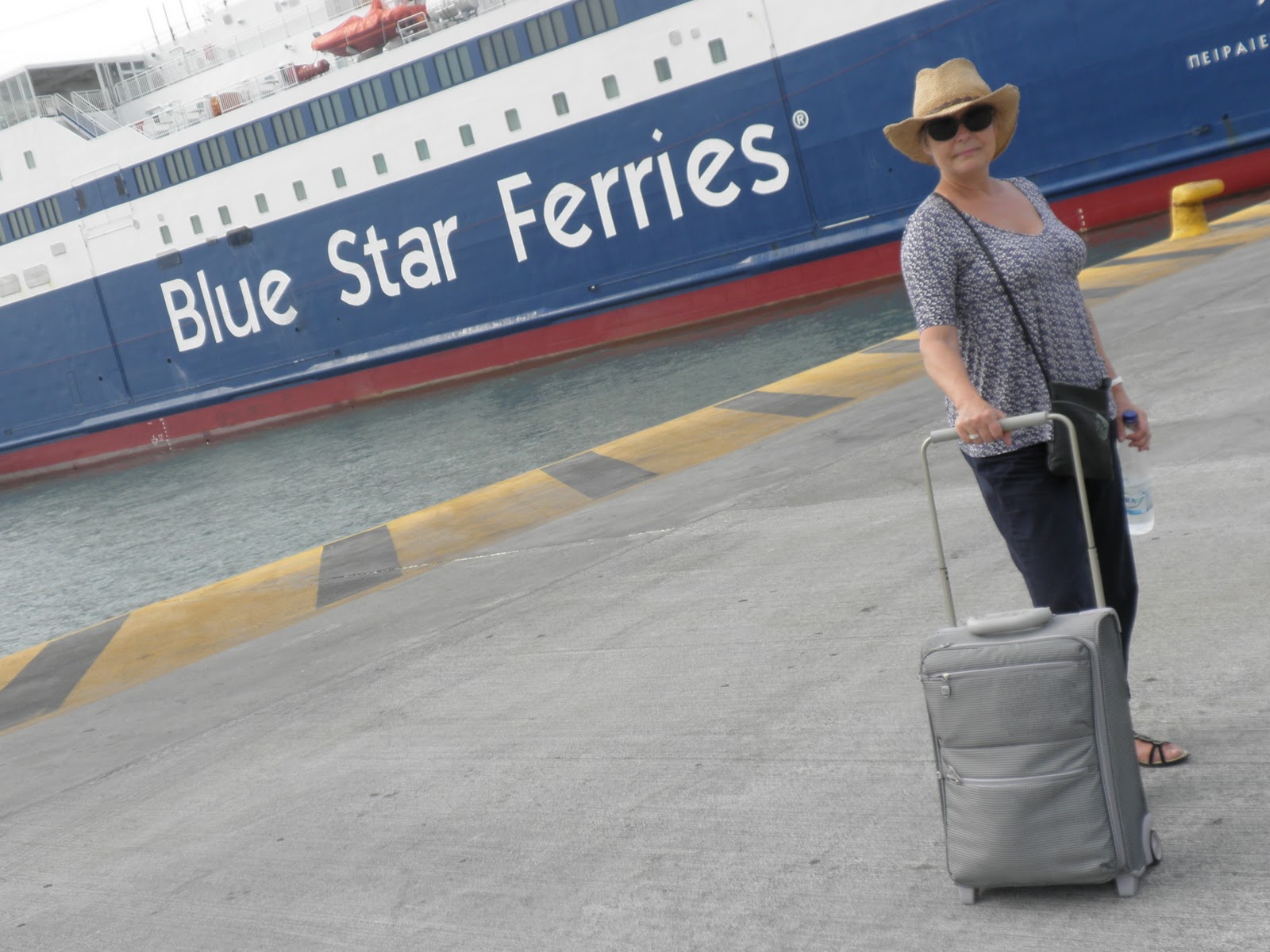
Today, Piraeus has regained its importance and is a mad world of taxis, trams, back-packers and local people all competing for the same piece of tarmac. This should not have been surprising because it is the largest passenger port in Europe and the third largest worldwide in terms of passenger transportation where nearly twenty million people pass through every year. There were certainly a lot of people about this afternoon and there was a long queue to get on board the Blue Star Paros and in the usual way foot passengers were competing for space with cars and commercial vehicles. We didn’t want to sit inside so we made our way to the top deck and found a seat outside at the back of the boat to catch the sun and we made ourselves comfortable in preparation for the four and a half hour passage to the island of Paros, one hundred and eighty-five kilometres to the south east.


Thursday, 11 November 2010

Greece 2010, Fortresses, Palaces, Knights and Ramadan


Early next morning we heard the self opinionated bankers leaving for the next leg of the journey to Kos and we were pleased that they had gone. For our last full day in Rhodes we had saved the visit to the Palace of the Grand Masters as we anticipated that this might be one of the highlights so after a second excellent breakfast on the terrace prepared by Sofia we set off again towards the heart of the old medieval city and the street of the Knights and at the top the Palace itself.

From the outside it looks impressive but it isn’t the original Palace of course because that was destroyed in an explosion in the nineteenth century. The blast levelled it (and pretty much everything else adjacent to it) to the ground and it was later rebuilt by the Italians who didn’t concern themselves too greatly with issues of historical accuracy. They thought it might make a good Palace for the Italian King to come and stay but as it happened he never visited Rhodes or stayed at the place. Just as in Lindos and the bodged reconstruction of the Acropolis they again used inappropriate building materials, which means almost constant repair work and today the huge main gate was entirely surrounded by scaffolding.

We paid the entrance fee of €6 each and competed with several organized tour groups as we went through the courtyard and into the succession of rooms and exhibits. It was quite interesting but we didn’t rate it as highly as the Archaeological Museum that we had visited the previous day and after an hour we had seen most of what there was to see and we were back out in the sunshine.

The old town was busy today which was no real surprise because Sofia had told us at breakfast that there were seven cruise ships due to stop by and visit today so we kept away from the crowded main squares and shopping streets and once again dropped into the back streets of the Turkish quarter and walked right through to one of the southern gates of the city. Temporarily leaving the old town we walked for a few hundred metres on the outer side of the walls through the new town. It was busy, grubby and dirty and we were glad when we reached the next gate and were able to return to the quieter streets of the old Jewish quarter. Quieter because although this used to be a thriving Jewish area they were all expelled during the Nazi occupation late in the Second-World-War and the Jewish community have never returned.

After a refreshing Mythos at the street corner bar we returned to the Sofia Pension for the afternoon and spent the afternoon relaxing on the terrace with a couple of beers.

During the three days we had tried to capture pictures of the Street of Knights at various times and in different lights so in the early evening we walked there once more and stayed there until the sun had completely disappeared in the west and the subdued street lights brought a different atmosphere to the place with a waxy glow reflecting off the pitted stonework of the walls.

When it was no longer possible to take pictures we walked back through the busy streets ignoring the waiters as we went and made for the Jewish quarter once more where we planned to eat at Kostas’ Restaurant which was one of Sofia’s recommendations. It wasn’t especially late but it was really busy already and we couldn’t get a table in the main dining room so had to sit in the hallway instead. It was so busy that the service wasn’t that good and although the food excellent I think on reflection we could have found somewhere better for our final meal in Rhodes.

To get back to our room we had to go through the Turkish quarter and past a Mosque where a service had clearly just finished. I took a look inside at the brightly coloured carpets and wall hangings but I didn’t think it was appropriate to go through the door. There were lots of men outside and one of them told me that this was an important night for Muslims because this was the last day of Ramadan. Ramadan is the ninth month of the Islamic calendar and is the month of fasting in which Muslims refrain from eating, drinking and sexual relations during the hours of daylight. Fasting is intended to teach Muslims about patience, humility, and spirituality. It is a time for Muslims to fast for the sake of God and to offer more prayer than usual. During Ramadan, Muslims ask forgiveness for past sins, pray for guidance and help in refraining from everyday evils, and try to purify themselves through self-restraint and good deeds. They all seemed a bit excited tonight and I suspect they were all going on to a party.

Thursday, 4 November 2010

Greece 2010, Lindos


There was no wind today and it was already hot on the balcony by breakfast time and unfortunately because of yesterday’s little accident there was no umbrella for shade. I walked to the mini-market for provisions and then we enjoyed a Lindian breakfast that we prepared for ourselves and ate on the terrace with its lovely view of the ancient and important village of Lindos. Here history stretches back over three thousand years and Lindos grew to prosperity under the Knights of St. John who built their fortress on the site of the ancient Acropolis. So much of the medieval village has survived that it has been declared a national landmark.

Because of its east coast location, Lindos is the hottest place on Rhodes and even in September by mid morning it was much too hot to sit on the terrace so we set off down the steep uneven steps towards the shady streets of the village and heading for the beach. Once past the steps where we had to watch every move it was a real delight to walk around the narrow streets with their traditional, distinctive, white and black chochlaki pebbled surface because no vehicles other than the odd delivery van are allowed inside. The village felt authentic because little or no changes can be made to the buildings, many of which have survived since the fifteenth century and the architectural style of the village is a mixture of Gothic, Byzantine Greek and middle Eastern influence.

Although there are no vehicles we did have to watch out for the donkeys that every day transport hundreds, probably thousands, of day visitors from the bottom of the village to the steps of the Acropolis and then back down again. I rode on a donkey here in 1997 and it seemed cruel so I vowed I wouldn’t do it again but later at lunchtime Mario explained that there are four hundred donkeys who work for two days and then get a day off and that working is good for them because they live an average twenty-one years which is seven years longer than a donkey that has nothing to do and I have to confess that they did look healthy and well looked after. We didn’t go on one though!

Eventually after a long descent we reached the first small beach which was full of sun loungers and umbrellas for people who stay there all day and no room to put down a towel for people like us who only stay for an hour or so. Not being prepared to pay €8 for the beds we continued to walk towards the main larger beach where there was some space on the stony scruffy bits behind the umbrellas where it was at least possible to make our own arrangements.

We swam in the sea and that was nice but we didn’t really like the beach all that much because it was much too organized for us with regimented rows of sun beds all crammed together in such a way as to make it difficult for cheapskates like us to put our towels down and avoid the charge and let’s face it €8 is quite a lot of money that we calculated would soon add up over a fortnight’s holiday. As well as the sun beds there were pedaloes, canoes, diving instruction and water sports and on balance we preferred the rock on Symi so we didn’t stay too long.


After a cold drink at a busy beach bar we walked back into the village which was bustling now with coach loads of visitors pushing and shoving through the narrow streets. There was a pretty whitewashed church at the bottom of the village which was built by the Knights in the fourteenth century and had some lovely frescoes and decorated floors but as there was an entrance charge and photography was forbidden we made do with admiring it through the door without going inside.

After lunch at Mario’s again we explored the other side of the village where the shops and bars petered out to be replaced with narrow streets of local houses where the smell of fresh moussaka and tide washing powder seeped out from behind the windows and doors. At the far end of the village there was an ancient amphitheatre, almost two thousand five-hundred years old and so adjacent to the modern buildings that it is certain there are more hidden treasures concealed below them which must have archaeologists drooling with anticipation.

Back at the apartment by late afternoon the terrace was much more comfortable now because the sun had swung to the west and was disappearing quickly behind the mountain range backbone of the island and by six o’clock the entire village was in shadow with only the massive outcrop of rock and the Acropolis remaining bathed in early evening sunshine. It was delightful so we sat for a while and enjoyed it and when it got dark we changed and went for evening meal at the same restaurant where the same irritating waiter pestered us again but the food was excellent so whilst we would rather that he hadn’t we didn’t really mind.

On the way out Kim convinced me that there was an alternative way down but it turned out that this was really just a ruse to make sure we passed a silver jewellery workshop directly below the apartments where she had a great time looking at the sparkly things on display and debating which particular piece to buy.

Pete and Jane and their friends John and Zoe were on the balcony so we joined them and Jane introduced us to the joys of Greek Metaxa brandy which we declared such a liking for we thought we might buy a bottle for ourselves the next day. We told them that we hadn’t especially enjoyed the beach experience at Lindos and with their extensive local knowledge of the area they recommended that we should try the beach at the next village of Pefkas instead which they assured us was quieter and less organized.