Showing posts with label Athens. Show all posts

Wednesday, 16 November 2011

Greece 2011, Athens and the Varvakios Agora (Central Market)


On the last day we deliberately woke early because we wanted to return to the busy commercial street close to the hotel and visit the central market called the Varvakios Agora which was only a hundred metres or so away and housed inside a huge building with a dangerously crumbling facade that looked as though it might catastrophically collapse into the street at any moment.

It was still early and the market was barely open but we dodged inside alongside the delivery vans and the first few customers of the day and went first to the hall of the butchers. This was as far away as it possible to get from the sanitized, styrofoam, plastic wrapped supermarket meat that we are familiar with in the United Kingdom. You can’t pretend that these cuts don’t come from an animal when the entire skinned body is hanging in front of you! It smelled authentic as well as the aroma of fresh flesh, blood and offal just filled the air and butchers in scarlet stained aprons attended their stalls and invited us to inspect the merchandise. We looked but explained that we wouldn’t be buying because Easyjet might have had something to say if we tried to take a sheep’s head or a goat’s carcass on board the plane later today in our hand luggage.

We made our way into the seafood section with seawater an inch deep sloshing over our sandals so that we had to pull up our trousers so that they didn’t get drenched at the bottoms. For sale here was just about every conceivable fish in the oceans, ranging from the smallest of sea creatures to massive shark and tuna steaks as well as nearly every possible variation of sea floor dwelling crustacean, mollusc or bivalve known to man. It wasn’t like the fishmonger stall at Morrison’s that’s for certain!

On the streets outside the market there were untidy little shops, just kiosks really, selling fruit and vegetables, cheese, olives, nuts and herbs and spices and whilst we couldn’t really transport meat, fish or cheese, we did purchase some little bags of spices to take home and after the transaction was completed I began to worry about taking these little multi-coloured bags of suspicious looking powder through customs later this morning.

The whole of Athinas Street was rather run down but was full of character and vibrancy with roadside kiosks, shoe shops, bakeries, coffee bars, army surplus stores, pet shops, each with a menagerie of animals, and hardware stores. All of the shops were preparing for the day’s trading – transferring stock outside onto the pavements where it would stay for twelve hours or so collecting dust and grime from the traffic along this busy street before the displays would be dismantled and taken back inside overnight. This was the beating heart of Athens in contrast to the tourist main shopping street of Ermou or the overpriced flea market at Monastaraki and we liked it.

There wasn’t a lot of time to hang around however so we returned to the hotel for our breakfast and then we packed our bags, checked out and paid the bill and walked back along Athinas and Ermou towards the airport bus stop at Syntagma. Even at half past eight in the morning the sun was flooding the street with bright light and heat and we were forced to walk in the shade so that we didn’t get too sweaty as we carried and pulled our bags.

We were taking the bus once more because we still weren’t too confident about using the metro and we were a bit edgy again but we needn’t have been because the one hour journey to the airport inevitably passed without incident and by mid morning we were checked in and in the departure lounge and ready for our four hour flight back to Manchester.

We had enjoyed our fifth back packing adventure to the Greek islands in as many years, we had returned to some old favourites, Ios, Antiparos and Katapola and added some new islands to our travelogue, Koufonisia, Paros and Egalia. We had had a wonderful time and we had been fortunate to miss the strikes and the travel disruption but as we waited we agreed that next year we just might do something different!


Monday, 14 November 2011

Greece 2011, Antiparos to Athens


When I woke in the morning it was a peculiar sensation but my head was still swaying as though I was still on Captain Ben’s boat and the bed was gently bobbing from side to side and I was happy with this because it was probably good preparation because we were shortly to take another small boat ride.

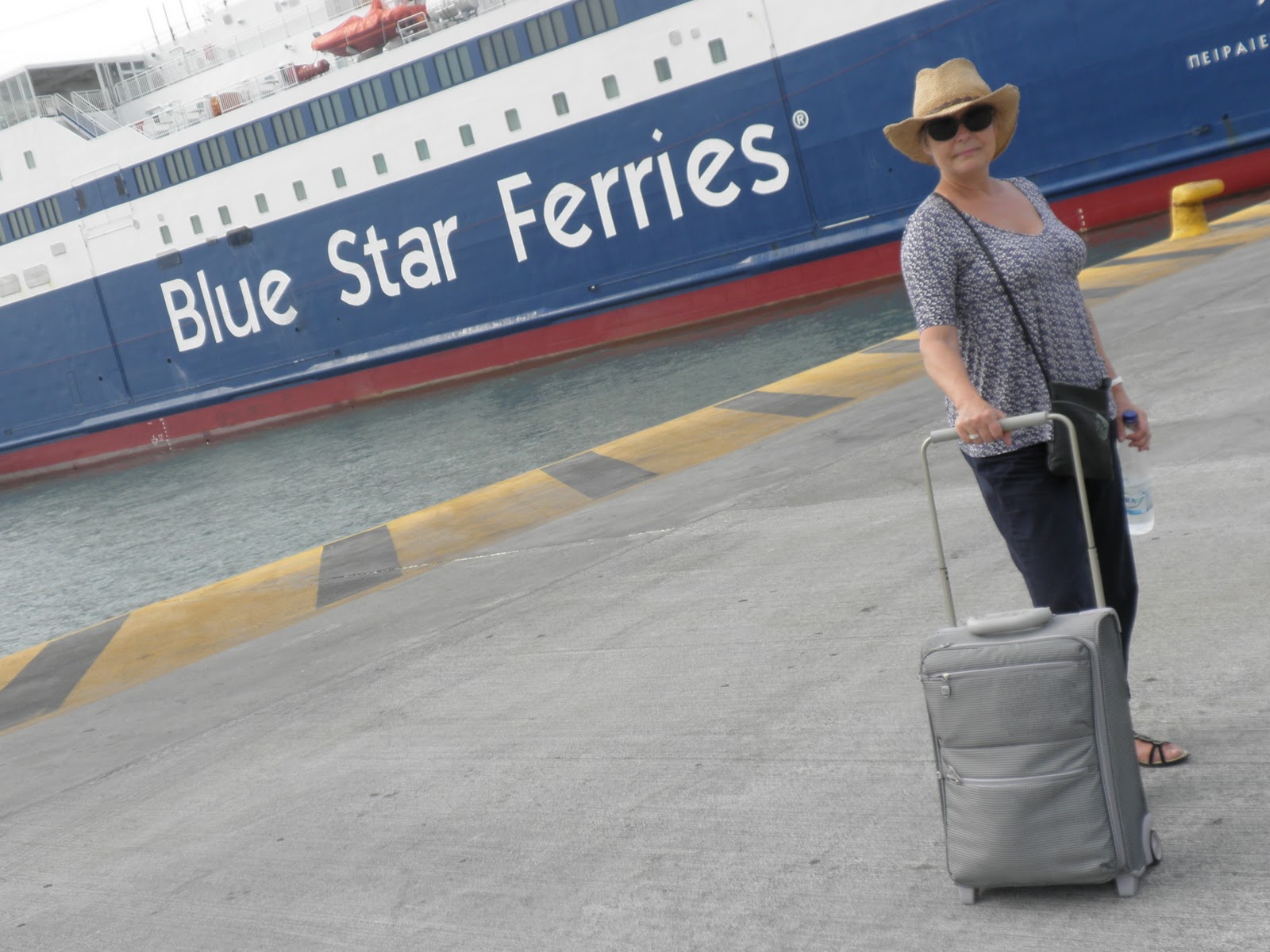
We had a ten-thirty appointment with the Blue Star ferry back to Piraeus but first we had to get back to Paroikia which meant a twenty minute taxi-ferry crossing to Paros so we skipped breakfast at the hotel, settled up and arrived in port in time for the short crossing to the larger island neighbour and the main port. We sat on the top deck and listened to the rumble of the engine and the growl of the exhaust as the boat negotiated the slight swell and delivered us to the quay side with enough time to spare for breakfast at a harbour side café and a quick trip to the supermarket for a couple of cans of Mythos for the journey.

The Blue Star Paros arrived on time and we made our way to the top deck and despite the fact that it was full to capacity we found seats at our preferred location on the starboard side of the boat so that we would be in the sun for the journey and where we waited for twenty minutes as the temperature rose as the sun got hotter and hotter before everyone was on board and the ferry finally cast off and slipped out of port.

Today the Aegean was clearer than I have ever seen it before and it was easy to pick out the islands of Mykonos, Delos, Tinos and Syros to the north and Naxos which steadily disappeared into the horizon behind us.

The ferry passed through the narrow channel between Kea and Kythnos and we were so close that we could clearly make out the small villages and the whitewashed towns clinging to what are really just mountain peaks poking out of the surface of the water and then shortly after that we could see the mainland and we began the final leg of the journey towards Piraeus. We had been sailing for nearly four hours now and the time had begun to drag but then we could see Athens, a gleaming mantle of white concrete spilling down to the sea and soon we were docked and in contrast to the slow pace of the islands pitched back into the madness of Piraeus.


Despite the robbery experience our plan was to take the metro into the city and we were edgy and nervous as we queued for tickets because in a Greek line it is essential to stay as close to the person in front (even if they are a pickpocket) because if you leave as little as a centimetre of space from the person in front then someone will interpret this as an opportunity to push in. The Greeks see queuing as a waste of time and an inconvenience and dislike it almost as much as the French and several people cut in front of me as I waited in line. I concluded that one thing’s for sure is that if there was an event at the Olympic Games for queuing then Greece and France would be an almost certainty for the final!

We negotiated the metro without any disasters and after emerging from the subterranean world we quickly found our accommodation, the curiously named Hotel Fresh, and settled in. It was a good hotel that I had paid for with Airmiles so seemed almost free and it was in a great area full of character that some of the hotel reviewers didn’t seem to appreciate but we liked it anyway. While Kim unpacked I walked along the main road lined with local shops full of character and found a place selling local wine in plastic bottles and a kiosk selling beer and made some purchases and returned to the room.

Let me remind you however that Athens was in the grip of a domestic and economic crisis so there was an edginess about the city and an unusually large number of police on duty at the main tourist spots as we walked to Monastaraki, The Plaka, Syntagma and Ermous and it suddenly occurred to me that perhaps they were preparing for a demonstration or worse still a riot so we retraced our steps to the hotel and stopped at a gyros place where we planned to have a roadside meal but there was only time for a beer as they took the tables and chairs inside and secured the shutters and closed. We noticed that every shop along the street was doing the same and the demonstration/riot concern returned.

Everything seemed settled enough however so later on we walked again to Monastaraki where we had a final holiday meal and then strolled back along a street of aluminium shutters all daubed in graffiti in various grades of obscenity and back to the hotel where we stood on the voyeuristic balcony and stared into people’s homes in the adjacent buildings as we finished off the plastic bottle of red wine before going to bed for the last time in Greece this year.


Saturday, 22 October 2011

Greece 2011, Blue Star Ferry to Paros


My apologies to residents of Piraeus but it is not the most attractive city in Greece – constructed almost entirely from limestone and clay as a reminder of the Athenians fifty year love affair with concrete and cement. In the words of Mike Gatting, this is not a place that you would even send your mother-in-law and we were pleased when the ferry slipped its moorings and headed out to sea precisely on time and our personal chill tanks started to fill with credit!

We were travelling economy class of course but this is the best place to be - sharing the open top deck with grey haired hippies with pony tails revisiting the 1960s, back-packers wearing creased clothes who haven’t washed for a fortnight, sun-seekers, thrill-seekers and nostalgia-seekers, bench-hogging sleep-snatchers, aging grey-beards in open toed sandals and sun kissed cougars strutting their stuff. This is good company thankfully missing the football shirts, lycra and stag and hen parties who have all flown directly to Mykonos and Zakynthos!

As the Blue Star left the port the engines throbbed reassuringly and black diesel smoke leaked from the exhausts; on the bridge and down below I imagined a frenzy of activity by the crew but on top it was lazy, languid and laid back. The ferry joined a line of boats leaving the port, rather like the start of a marathon race with dozens of competing ships looking for the best channels and tides.

It was hot and humid but after a few minutes large clouds began to build, the skies darkened and the sun disappeared as the ferry followed the coastline of the Greek mainland before slipping between the islands of Kea and Kithnos and into the Cycladic ring. We couldn’t see the islands to the north and south because it was hazy and dull but after a couple of hours the clouds began to break and the sun spilled through casting orange pools on the shiny blue surface of the water as the Rayleigh scattering effect began the daily process of turning the sky from blue to red.

It was just at this time that Kim lamented that in all of our ferry boat journeys in Greece we had never seen dolphins and then by a stunning coincidence, within only a few seconds, and I swear that this is true, we suddenly saw dolphins! About a hundred metres from the boat dorsal fins began to slice through the surf and then several of them were leaping into the air and some swam obligingly close to the boat below us. As word began to spread more people came to our side of the ferry and I worried about weight distribution and whether the boat might topple over but after a few minutes the show was over and everyone began to drift back to their seats. We stayed on dolphin look out duty for a few more minutes but no more appeared.

As the sun disappeared the journey began to drag and the dampness that accompanied the darkness forced us inside for the last hour and we were glad when we arrived in Paroikia at ten o’clock and joined the pushing, jostling crowd and left the Blue Star. As usual the quayside was full of apartment owners trying to sell their rooms in a sort of chaotic scramble that makes a French bus queue look well organised but we were met as promised by our transportation to the nearby Hotel Dilion on the edge of the town and we carved our way through the turmoil.

It turned out to be acceptable but not breathtaking and we simply left our bags and strolled to the sea front to find somewhere for a late meal. We were away from the town centre and found a good looking place busy with local people, which is always a good sign, so we joined them and enjoyed a fine meal and some impromptu entertainment as diners on the next table frequently interrupted their meal to break out into traditional dance. It was late and gradually the tavern started to empty as people paid their bills and left and it was some time after midnight when we made our way back to the hotel looking forward to a good sleep after a very long day.


Greece 2011, Piraeus – Planes, Buses, Taxis and Ferries


In the weeks and days before flying to Athens to start a holiday in the Cyclades I began to wonder if it really was a clever idea to fly into a city in the grip of economic crisis and social disorder with regular demonstrations and disruptive strikes by the transport sector which we would be completely reliant upon to get from the Greek capital to the islands. But we put on our holiday blinkers and ignored the concerns and reluctant to spend more money on an alternative flight to Santorini went through with the original plan.

On a previous arrival at Athens airport I was metaphorically mugged by a taxi driver and paid a fortune to get to the city and the last time we left Athens Kim was literally robbed on the metro so we didn’t want to chance either of those options this time and took the only alternative form of transport available, the X96 express bus to Piraeus. The man in the ticket booth was rather terse and didn’t have his ‘welcome to Athens, nice to see you’ head on this lunch time but I suppose anyone would be grumpy if it is their job to sit in a stuffy wooden box all day answering the same dumb question over and again. The cost was €5 which was an eye watering 56% more expensive than two years previously and I hoped this wasn’t indicative of an average inflation rate over this time or else this would put the holiday budget under extreme pressure.

A bus ride in Athens is a unique experience, it has to be said. The roads were busy but the driver of the Solaris flexibus seemed totally oblivious to other vehicles as he charged along at high speed, switching lanes, clattering over tram lines and tossing the passengers about like the Saturday night lottery balls on hard unyielding plastic seats. It was like being in a car chase at the movies, anyone in the way had better watch out and at one stage I had to take a look to see if Sandra Bullock was driving. Corners didn’t slow the bus down and the only respite from the madness was a few infrequent stops on the way to the port, which we reached after about fifty minutes.

The metro would have been preferable but you get mugged on the metro and as this was our first time back in Athens since the robbery we were understandably on edge. We had taken improved precautions to protect our possessions but we still felt nervous and slightly anxious. We continually scanned the bus for potential robbers and pickpockets and held on tight to our wallets, cameras and bags and after every stop we suspiciously scrutinised every new passenger that joined us.

In our experience dining options around the port are seriously limited and after we arrived in Piraeus there was about four hours before the ferry to Paros so we had made plans to visit a taverna/bar that we knew and to have a long lunch to fill the time.

This involved a walk along the busy harbour front and this was not as easy as it sounds because Piraeus simply has to be one of the most traffic crazy places in Europe that makes an Italian city look like Emmerdale on a late Sunday afternoon and there was a mad confusion of snarling traffic that almost defies description. Cars, buses and lorries were all growling aggressively through the streets with absolutely no regard for traffic lights, lanes, rights of way or pedestrians (especially pedestrians). Swarms of yellow and black cabs drove around with complete disregard for anything else and for anyone foolish enough to irritate them it was like poking a stick into an angry wasp’s nest. The madness was being ineffectively choreographed every now and again by traffic police blowing madly on whistles and waving arms in a totally manic way that quite frankly was completely unintelligible to absolutely everyone whether in a car or on the pavement and all in all didn’t seem to be helping a great deal.

It is easy to imagine that Piraeus is simply a suburb of Athens but it is in fact a completely separate city, the third largest in Greece, with an interesting history all of its own. Most of this we fail to appreciate because we just hurry through on the way to somewhere else. In 493 BC, taking advantage of the natural harbour and strategic geographical position, the Athenian politician and soldier Themistocles initiated the construction of fortification works in Piraeus to protect Athens, ten years later the Athenian fleet was transferred there and it was then permanently used as the naval base for the powerful fleet of the ancient city.

Themistocles fortified the three harbours of Piraeus with the Themistoclean Walls turning Piraeus into a great military and commercial harbour. The fortification was farther reinforced later by the construction of the Long Walls under Cimon and Pericles, with which Piraeus was safely connected to Athens. Piraeus was rebuilt to the famous grid plan of the architect Hippodamus of Miletus to a pattern that has been replicated in many cities in the USA and in Milton Keynes in England. The walls were destroyed after the defeat by Athens to the Spartans in the Peloponnesian war and the port of Rhodes assumed predominance in the Aegean. Later the walls were rebuilt but destroyed again by both the Romans and the Goths and during the Byzantine period the port completely lost its trading status.

Today, Piraeus has regained its importance and is a mad world of taxis, trams, back-packers and local people all competing for the same piece of tarmac. This should not have been surprising because it is the largest passenger port in Europe and the third largest worldwide in terms of passenger transportation where nearly twenty million people pass through every year. There were certainly a lot of people about this afternoon and there was a long queue to get on board the Blue Star Paros and in the usual way foot passengers were competing for space with cars and commercial vehicles. We didn’t want to sit inside so we made our way to the top deck and found a seat outside at the back of the boat to catch the sun and we made ourselves comfortable in preparation for the four and a half hour passage to the island of Paros, one hundred and eighty-five kilometres to the south east.


Saturday, 12 December 2009

Greece 2009 - Day 17, Athens, a city of thieves


After four years of visiting Athens on the way to a Greek island-hopping holiday I have finally managed to see the new Acropolis Museum. It was originally planned to be completed in 2004 to accompany the return of the Olympic Games to their spiritual Athenian home but construction setbacks and various outbreaks of controversy along the way have meant that it did not finally open to the expectant public until June 2009.

The long awaited €130m Acropolis Museum is a modern glass and concrete building at the foot of the ancient Acropolis and home to sculptures from the golden age of Athenian history. Unlike any other museum in the world this one has been designed to exhibit something it doesn’t own and can’t yet exhibit and the Greek Culture Minister has said that he hopes that it will be the catalyst for the return of the disputed Marbles from the British Museum in London because about half of the sculptures have been there since they were dubiously sold to the museum in 1817.

http://apetcher.wordpress.com/2009/06/21/the-acropolis-museum-in-athens/

http://apetcher.wordpress.com/2009/09/20/acropolis-museum-and-lord-elgin/

We spent most of the morning in the museum and after we had finished we walked around the ancient city admiring all of the sights. Athens is a wonderful place for visiting ancient monuments and buildings, in addition to the Acropolis there is the Ancient Greek and Roman Agora and the dramatic Temple of Zeus with its spectacular columns thrusting triumphantly into the sky. They are all in pretty poor shape it has to be said, the Parthenon at the Acropolis was blown up by Venetian invaders when it was being used as an armoury store, most of the Agora is pretty much non existent and the Temple of Olympian Zeus has only a handful of its original columns still standing.


http://apetcher.wordpress.com/2009/06/22/athens-ancient-greece/

We checked the bus times back to the airport and discovered that the metro line had been reopened so we agreed that would be our preference and once confident of times we walked through Monastiraki with its cramped little tourist shops and back to the Plaka where we found a place for a drink next to the Agora. For some reason Athens felt different this year, there were more beggars, more lucky-lucky men and more gipsy kids pestering us at the table for handouts. It didn’t feel quite so safe.

Despite this, it was the last day of the holiday and we had spent a good day in the Greek capital even when it started to rain later in the afternoon. Finally we had a last meal before collecting our bags from the Royal Olympic and made our way back to the airport. This was the fourth year of taking the metro and I have never felt uncomfortable or unsafe in any of the previous three years but this time something was different. Syntagma station was busy and felt edgy and when the train arrived we had to force our way onto unusually crowded carriages.

As soon as I got on board I knew something was wrong and this is how they did it. At the very last moment a group of three or four young men rushed onto the train causing mayhem and confusion and pushing and shoving and moving other legitimate passengers around. In the melee we were separated so couldn’t watch out for each other and I knew instinctively that something was going to happen in that carriage. In hindsight it is easy to see that we had been targeted, we had been on holiday, we were off our guard, weighed down with bags and the way that Kim was looking after her bag made it obvious that there was something inside that she would prefer not to loose.

One man stood by the door but then I sensed that he was determined to stand next to me and he pushed in and stood so close I could smell his body odour and it was most unpleasant. I knew what he was doing but luckily I was wedged in a corner so I gripped my wallet in my pocket in a vice like white knuckle grip and turned away from him so that he couldn’t get a hand to my right side where my wallet and my camera were. He knew he was rumbled, gave up and moved on pushing and shoving the other passengers as he went.

Kim was stranded in the middle of the carriage but I could see that she was clutching her handbag tight to her chest and I felt reassured that she too was being extra careful. Suddenly I noticed that she was bothered by something and was examining her ring. One of the thieves had placed a bit of wire around the stone and had pulled it so hard that it had bent the ring and it had hurt her finger. She said that at the time she thought it had been caught in a zip or a strap from someone’s bag but this must be a well practiced diversionary tactic because at the moment she reacted he managed somehow to open the zip of the bag and remove the first thing that he found. All of this happened so quickly and at the next stop they were gone and so was Kim’s camera.

http://apetcher.wordpress.com/2009/10/04/athens-pickpockets-some-thoughts-on-being-robbed/

This incident rather spoilt the holiday and we left Greece with a sour taste in our mouths. All of Kim’s precious pictures were gone including her favourite of the naked man on the beach on Ios and these were priceless and irreplaceable. I hope we will return to the Greek Islands again next year but we probably won’t be stopping off in Athens.

Saturday, 5 December 2009

Greece 2009 - Day 16, Blue Star to Piraeus


The Hotel Korali put on a good breakfast and we were amongst the first in the dining room because we had an early start and a nine-thirty ferry to catch for the return journey to Piraeus. The hotel owner drove us to the port and with a day of disasters behind us we were optimistic about better prospects for today.

The Blue Star Naxos arrived on time and there were a lot of passengers to get on board before it could leave again. The Blue Star ferries can carry one thousand five hundred passengers and two hundred and fifty vehicles and the line of cars waiting to drive on board stretched all along the port and back to the town square. When the gate was opened we pushed our way on board and made for the top deck where we had plans to find a seat in the sun and we found some at the back of the boat which we estimated would enjoy the sun all the way to the mainland and we settled down and after the boat had loaded up and left the port watched Naxos slipping away behind us.

We had chosen good seats and they would have been perfect except for a group of Swedes next to us who couldn’t seem to settle down and they kept rearranging the furniture, changing seats, which seemed to involve a lot of unnecessary pushing and shoving and talking to each other in very loud voices. Soon we were following the shoreline of Paros and within an hour the ferry was pulling into the harbour for its last stop. The port was heaving and there was the usual chaos associated with a big ferry coming into town. Cars, busses and big trucks were all competing with the foot passengers for a place on the quayside but despite the fact that there appeared to be absolutely no organisation at all everyone finally got on board and there were no fatal accidents and soon the boat was under way again with a four hour journey ahead to Piraeus.

The restless Swedes had a picnic, which meant more furniture reorganisation and then thankfully they settled down for the journey. Other passengers manoeuvred themselves into preferred positions and everyone found their own way of passing the time. We finished off the last few pages of our books and then from my map I tried to follow the route and identify the islands on the way. We slipped between Serifos to the south where we had started our adventure fifteen days ago and then Kythnos to the north and I wondered if this might be worth a visit so I looked it up in the Island Hopping guide and it said not so I removed it from the emerging itinerary for next year that was beginning to take shape in my head.

As the mainland came into view the last hour of the journey began to drag as we started to look forward to being on dry land again. From the sea Athens was laid out before us, nestling beneath the mountains to the north, east and west (Parnitha, Pendeli and Hymettos) and the Saronic Gulf to the south. Out at sea, where we were, the expanse of grey concrete, which formed the outer environs of the city, shimmered brightly in the strong sun and it looked much more attractive than I guessed it would from up close.

Piraeus was hot and noisy, the traffic was as we remembered it when we left, pushy taxi drivers were touting for business, the lucky-lucky men were selling counterfeit goods and there were dusty road works just outside the metro station. The metro at rush hour was not a pleasant experience. It was overcrowded and felt dangerous and without a seat we stood and guarded our possessions for fear of pickpockets. We were glad when after eight stations we arrived in Omonia and changed lines to a less crowded train and travelled the three stops to the Acropolis station where we emerged from the underground tunnels back into the open air and the oppressive heat of an Athens September afternoon.


We knew roughly where the Royal Olympic hotel was and with some helpful directions from a taxi driver found it quickly, crossed the busy main road and presented ourselves at reception. The Royal Olympic is a five star hotel and we don’t usually do five star but I had spotted a good deal and broken the normal rule. It was very smart and plush and I felt a little out of place and conspicuous in dusty sandals, a salt streaked shirt and a battered backpack, which I put down as inconspicuously as I could and well away from the Versace and the Louis Vuittons. The supposed deal was a €650 executive room for €120 and the room was nice and I was happy with the price we had paid but it certainly wasn’t worth €650.

The trouble with five star hotels of course is that they have five star prices and after I had got over the shock of the mini-bar prices (€7.50 for a small beer) and had a good laugh at the restaurant prices I slipped out of the hotel and found a little shop with alcohol at sensible prices, purchased some cans of mythos and a carton of cheap red wine and sneaked it through reception as discreetly as I could and took it back to the room.

After we had had a drink on the balcony and tidied ourselves up we declared ourselves presentable enough to wander around the hotel and we made for the top floor roof garden and restaurant where there were some stunning views over the Temple of Olympian Zeus directly opposite. The restaurant looked nice and it was being fastidiously prepared for later but on account of the prices we knew we wouldn’t be dining there so we left the hotel and walked to the Plaka to identify alternative arrangements.

It was late afternoon and the streets and the shops were busy but the restaurants and tavernas were short of customers and every few metres we were stopped and encouraged to go inside and eat. It must be obvious that five o’clock in the afternoon is not the time most people want to dine and we turned them all down with a smile and a promise to consider going back later. One man fancied himself as a bit of a comedian and was quite entertaining and his menu looked interesting so we thought we might let all of the others down and go there.

Saturday, 26 September 2009

Greece 2009 - Day 1, Piraeus


Because of the increasing cost of parking the car in any sort of airport car park this year I arranged for family transport to and from Luton (thanks Alan, thanks Richard) and we arrived with plenty of time to spare before the flight. Luton airport now operates on the Ryanair principle of charging people for services that we used to take for granted as a part of catching a flight. £1 just to drop passengers off at departures, £3 for speedy security checks, £1 for a plastic bag to put liquids in, £9.50 for speedy check-in and boarding and 50p for every breath taken while waiting.

We didn’t pay for any of these rip-off extras and I bet the people who did felt rather silly because there was no delay through security and not much of a queue at the departure gate either. Generally there are two queues at the boarding gate, one is for gullible people who have paid the extra to get on the plane first and there is the queue for sensible people who are savvy enough to know that there is a seat for everyone on the aircraft anyway. I bet they felt even sillier when we boarded because the plane was only about half full and there was plenty of seats for everyone to choose exactly their favourites.

When we finally got away the flight lasted just over three hours and landed in Athens at the 2004 International airport of the Year, Eleftherious Veizelos, and we quickly retrieved our backpacks from the luggage carousel and walked briskly to the metro station for the thirty-five-kilometre journey to the city centre. It was a shock to find that the metro wasn’t running today and had been closed for sometime. It seems that when they opened it in 2004 ready for the Olympic Games they forgot to build some of the stations along the route and the line was now closed while they finished off.

On a previous arrival at Athens airport I was mugged by a taxi driver and paid a fortune to get to the city so I wasn’t going to make that mistake again so we were obliged to use the only other form of transport available, the X96 express bus to Piraeus. This was the first time on a bus in Athens and it was quite an experience. The roads were busy but the driver seemed totally oblivious to other vehicles as he charged along at high speed, switching lanes and tossing the passengers about like the Saturday night lottery balls. It was like being in a car chase at the movies and at one stage I had to take a look to see if Sandra Bullock was driving. Corners didn’t slow the bus down and the only respite from the madness was a few infrequent stops on the way to the port, which we reached after about forty minutes. A good value roller coaster ride at only €3.20 each.

We arrived at about eleven o’clock at night and it was hot and dirty and noisy but despite that it felt strangely safe. Earlier in the day it had been raining but this hadn’t washed the streets at all because Piraeus is a city where street cleaning is not a priority. We skipped the taxi ranks and decided instead to walk to the Hotel Ideal along cracked and dirty pavements towards the red light area at the east end of the port. We had stayed here before so we knew where the hotel was and even though it is in a less than salubrious area it is actually quite nice with a comfortable room and friendly staff.

We needed to eat and the affable man on reception made us feel welcome and made some restaurant suggestions. This didn’t take him very long because although nineteen million passengers pass through the port of Piraeus every year the dining options turned out to be very seriously limited indeed. We left the hotel and returned to the port and with very little to choose from agreed on a gyros place with plastic tables and chairs on the dirty pavement and had a substantial chicken wrap and a first bottle of Mythos. The meal came with tzatziki, salad, fries and an extra special topping of lead oxide because as we ate we watched the traffic chaos as a ferry arrived in port and disgorged its passengers onto the busy road right in front of where we were eating. Piraeus is an interesting place, loud and busy and totally focussed on the harbour and the ferries and is somewhere that is never ever going to be beautiful or is going to tempt any sane person to stay more than one night. This is a place that where you wouldn’t even send your mother-in-law!

It was about midnight when we returned to the hotel and after setting the alarm for six there wasn’t a lot of time to be finding out any more about the hotel Ideal. If I was rating it I would say that it was one grade up from a hostel and in a scruffy area of the city but it was only €45 for a night and I slept with my wallet and passport just in case.

When we woke at six the next morning Piraeus was already busy and noisy and after leaving the hotel we walked along the busy and turbulent streets to the Aegean Lines Ferry Agency where we exchanged our pre-paid voucher for tickets and made our way to the ferry. This was not as easy as it sounds because Piraeus simply has to be one of the most traffic crazy cities in the world that makes an Italian city look like a sleepy village in Surrey on a late Sunday afternoon and there was a mad confusion of snarling traffic that absolutely defies description. Cars, busses and lorries were all growling aggressively through the streets with absolutely no regard for traffic lights, lanes, rights of way or pedestrians (especially pedestrians). The madness was being ineffectively choreographed every now and again by traffic police blowing madly on whistles and waving arms in a totally manic way that quite frankly was completely unintelligible to absolutely everyone whether in a car or on the pavement and didn’t seem to be helping a great deal.

This should not have been surprising because Piraeus is the largest passenger port in Europe and the third largest worldwide in terms of passenger transportation. There were certainly a lot of people about this morning and there was a long queue to get on board the Aegean Lines Speedrunner IV and in the usual way foot passengers were competing for space with cars and commercial vehicles. We didn’t fancy sitting inside so we made our way to the top deck and found a seat outside at the back of the boat to catch the sun and we made ourselves comfortable in preparation for the two and a half hour passage to the island of Serifos.


Friday, 18 September 2009

Acropolis Museum & Lord Elgin


After four years of visiting Athens on the way to a Greek island-hopping holiday I have finally managed to see the new Acropolis Museum. It was originally planned to be completed in 2004 to accompany the return of the Olympic Games to their spiritual home but construction setbacks and various outbreaks of controversy along the way have meant that it did not finally open until June 2009.

I purchased tickets on line for just €1 (prices will rise to €5 in 2010, so if you want a bargain go soon) and arrived at my alloted time of ten o’clock. I had feared that the place would be crowded and uncomfortable but this was not the case at all and without the lines of visitors that I had anticipated it was easy to cruise past the ticket desks and into the museum. I had a gigantic sense of anticipation because I have visited the old inadequate museum at the top of the Acropolis a couple of times before in 2000 and 2006 and I have been genuinely looking forward to seeing this magnificent replacement. I have to say that anticipation was mixed with trepidation because having followed the saga of the open wound debate about the Elgin Marbles (Parthenon Sculptures) I genuinely wondered how I was going to feel.

The long-awaited €130m Acropolis Museum is a modern glass and concrete building at the foot of the ancient Acropolis and home to sculptures from the golden age of Athenian democracy. Unlike any other museum in the world this one has been designed to exhibit something it doesn’t own and the Greek Culture minister has said that he hopes that it will be the catalyst for the return of the disputed Marbles from the British Museum in London because about half of the sculptures have been there since they were dubiously sold to the museum in 1817. The gloves are now off and the battle is now on between this, the new state-of-the-art Acropolis Museum, and the British Museum for the right to permanently exhibit them.

Outside the museum and also in the cavernous entrance hall there are glass floors with views of the excavations that were discovered during the construction of the building and contributed to the delays and then there is a steady incline through seven centuries of history and impressive well set out displays along a generously wide gallery that provides sufficient space for everyone to stop and enjoy the exhibits without feeling hurried or under pressure to move on. Moving on to the second floor there are two galleries that I have to say I did not find so well set out and involved a rambling walk through a succession of exhibits that was not helped by the absence of a simple floor plan guide to help guide the visitor through and having finished with the second floor I then had to double back to get to the third and the Parthenon Gallery having avoided the inevitable over priced café terrace and shop on the way.


After an hour passing through centuries of ancient Greece I finally arrived at the top floor Gallery, which is designed to eventually hold and display all of the Parthenon sculptures but for the time being has only about 50% of the originals and the rest are plaster casts made from (and controversially paid for) of the remaining treasures temporarily remaining in London. It is truly impressive and with the Acropolis Hill and the Parthenon looming up outside I can only explain it rather inadequately as a memorable experience. The top floor is designed to provide a full 360º panoramic of the building and how the sculptures would have looked when they were originally commissioned and sculptured in the fifth century BC.

Today, the Greek Government, and most of the Greek people, would rather like the sculptures back but have recently turned down a British Museum offer to give the Marbles to the Acropolis Museum on a loan basis for just three months. The Culture Minister Antonis Samonis explained that “The government, as any other Greek government would have done in its place, is obliged to turn down the offer. This is because accepting it would legalise the snatching of the Marbles and the monument’s carving-up 207 years ago,”. On the whole I am inclined to agree with this and believe that the place for the sculptures are in Athens and not London but this is a complicated debate that cannot be rushed and a few more years sorting it out is hardly going to matter.

I really liked the Museum but what I didn’t like especially was the demonising of Lord Elgin and the unnecessary nationalist, provocative and belligerent anti-English sentiment attached to the explanations and the video commentary because I consider that offensive as an English visitor and it made me feel slightly uncomfortable and unwelcome. The descriptions of Elgin as a looter and a pirate seemed especially designed to stimulate a reaction from visitors from the USA who were encouraged to gasp in awe that an Englishmen could have done such terrible things. I know that a lot of what should be in Athens is in London but let’s not forget that there is also bits of it in the Musée du Louvre, Paris, the Vatican Museums in Rome, the National Museum, Copenhagen, the Kunsthistorisches Museum, Vienna, the University Museum, Würzburg and the Glyptothek in Munich all of which seems to have been conveniently ignored.

There are many factors to take into consideration. We do not know if Elgin's actions were legal at the time but he had certainly obtained from the Turkish authorities, then in control of Athens, permission to work on the Acropolis and it seems that he had a genuine interest in archaeology and the preservation of the past. What shouldn’t be forgotten is that when Elgin removed the sculpture from the Parthenon, the building was in a very sorry state indeed and this is expediently omitted from the commentary and the otherwise excellent interpretation. From the fifth century BC to the seventeenth century AD, it had been in continuous use. It was built as a Greek temple, was later converted into a Christian church, and finally, with the coming of Turkish rule over Greece in the fifteenth century, it was converted into a mosque.

Although we think of it primarily as a pagan temple, its history as church and mosque was an even longer one, and no less distinguished. It was, as one British traveller put it in the mid seventeenth century, 'the finest mosque in the world' but all that changed in 1687 when, during fighting between Venetians and Turks, a Venetian cannonball hit the building, which was inappropriately being used as a temporary a gunpowder store and approximately three hundred women and children were amongst those killed, and the building itself was devastated. By 1800 a small replacement mosque had been erected inside the shell, while the surviving fabric and sculpture was suffering the predictable fate of many ancient ruins.

Elgin might be the bad guy in the eyes of the Greeks but what the Acropolis museum conveniently fails to mention is that at the time he removed the sculptures the local population was using it as a convenient quarry and a great deal of the original sculptures and the basic building blocks of the temple itself, were being reused for new local housing or simply being ground down for mortar. Whatever Elgin's motives for removing the sculptures there is no doubt at all that he saved them from possible even worse damage and without his intervention we might not be even having the ‘Elgin Marbles’ debate at all. I would urge visitors to think about that especially the indignant American who I overheard saying that he planned to write to the British Government with his ill informed opinions! It is important to put things into historical context. Two hundred years ago there was no UNESCO and this wasn’t like turning up in Washington DC and removing the Lincoln Memorial and just carting it away because two hundred years ago very few people actually gave a damn!

Yes the sculptures should be returned to Athens but let’s please acknowledge Elgin’s important role in having saved these precious artefacts for posterity and for the World. The man was not a villain!