Sunday, 15 January 2012

France, Béziers and The Origin of Faeces


It was quite a steep and demanding climb up from the river L’Orb to the Cathedral St. Nazaire which took us through the narrow streets of the old quarter which except for electricity, mobile phones and satellite dishes probably hasn’t changed a great deal since the days of the French Revolution. The Cathedral is one of the largest and most important in the region but sadly it was closed right now for lunch so we had to make do with the sweeping views from underneath its Gothic exterior across the meadows and woodland on the other side of the river bathed in light swirling mists all the way to the Montagne Noire (Black Mountains) in the Languedoc National Park away to the west.

Behind the Cathedral and in the streets running off the Place de la Revolution we found the restaurants that it would have been nice to come across the previous evening so we checked the menus and the prices for later and having found one that we both liked agreed that we return later. We left the old quarter and walked to the modern centre of Béziers with the shopping streets flanked on all sides by tall handsome buildings with iron balustrades and balconies rather in the Catalan style. We stopped for a while in an expansive square and had a drink in the hot sunshine and watched local people going about their business and then we walked on.

Béziers is a member of ‘The Most Ancient European Towns Network’ which is a group of the oldest cities in Europe in a sort of exclusive twin-town arrangement. It was founded in 1994 with the aim of addressing common issues within the towns, such as archaeological research, tourism and heritage. The members include Argos (Greece), Béziers (France), Cadiz (Spain), Colchester (United Kingdom), Cork (Ireland), Évora (Portugal), Maastricht (Netherlands), Roskilde (Denmark), Tongeren (Belgium) and Worms (Germany).

I wonder if, when they get together, they talk about dog mess because although Béziers is a nice city, like a lot of other places in France it really has a serious problem with canine excrement! I assure you that I am not exaggerating here but literally every few metres along the footpaths we came across little piles of dog poop. It is estimated that France has nearly nine million pet dogs and as a general rule the owners couldn’t give a frog’s leg where little Fido drops his load and they would no more think about clearing it up than they would consider drinking Californian red wine or standing in line at a bus queue.

Occasionally we saw evidence of doggie doo victims – an initial large skid mark at the source of the unfortunate event and then a pattern of diminishing patches where the victim has tried to remove the obnoxious filth from their shoe. Avoiding it is a chore but it’s easy to know when you have stood in it – it could be a slip and a slide and a sprained ankle, it might be a gasp from a passer-by as they clasp a hand over their face or, if neither of these, it is almost certainly going to be the malodrous smell that is released. This certainly explained why lots of families in Béziers seemed to keep their shoes outside on the balconies because next to stepping in nuclear waste tredding in dog waste is one of the most unpleasant accidents of all as the foot comes down and like a faeces fondant the hard crust breaks and the smelly interior oozes out and fills the tread in the soul of the shoe!

You have certainly got to have your wits about you in Béziers that’s for sure if you are not going to spoil the sightseeing walk with a smelly accident. For the most part the art of safe passage is a subconscious affair – the eyes briefly scan downwards taking in the next six or seven metres of pavement in front, and then you can walk forwards in moderate confidence before the process starts again. One thing that you definitely don’t want to do on an Autumn day like this one however is walk through or kick the fallen leaves because there is no way of telling what obnoxious filth lies beneath.

It was still quite early when we returned to the Hotel and Kim had had enough of walking even after a short break and a glass of wine declined my invitation to go back out into the city again. I thought that there may still be things to see so I left her resting and went first to the Park des Poetes which was glorious now, bathed in late afternoon sunshine perfectly accentuating the colours of Autumn. In a prominent position in the park was a monument to another of Béziers’ famous, Jean Moulin, one of the heroes of the French Resistance in the Second World War and then I left and walked along Allées Paul Riquet, turned right at the statue and walked for about a kilometre to the crimson bull ring which was closed now for the season and was undergoing a refurbishment. To be honest, Kim made a good decision here because Béziers is never going to get into my personal top ten of favourite cities and having seen the arena I returned directly to the hotel.

In the evening we walked back into the city and went to the restaurant that we had picked out earlier where we had a nice but unexceptional meal before walking back to the room for the final night in the city.


Friday, 13 January 2012

France, The Canal du Midi


We planned to stay in Beziers today, partly because it seemed good manners to spend some time there rather than dash off elsewhere and partly because I didn’t relish the prospect of reversing the Citroën out of the garage again. So, after another good breakfast we left the hotel and walked through the Park des Poetes which is a lovely oasis of green space with water features, wildlife and winding paths past statues and fountains. We strolled through and out of the park and then an untidy part of the town and underneath the railway line down towards the River L’Orb and the Canal du Midi which is one of the engineering marvels of France.

The idea of creating a waterway as a shortcut between the Atlantic Ocean and the Mediterranean Sea had captured the imagination of successive French Kings and governments since Roman times. The regional route overland was slow, uncomfortable and haunted by bandits; the three thousand kilometre passage by sea took at least a month and was also dangerous as ships negotiating the Spanish coast dodged storms and Barbary pirates to pass through the Strait of Gibraltar.

In 1516, King François I invited Leonardo da Vinci to France to carry out a survey of a possible route, but this project was even beyond the great man and was abandoned because of the apparent impossibility of finding a source of water to fill any canal. Finally in the second half of the seventeenth century Paul Riquet had the vision and the courage to finance and complete the project. When finished it boasted ninety-one locks, three hundred and twenty-eight bridges bridges, dams and tunnels, and forty viaducts. In its citation and admission to the list of World Heritage Sites, UNESCO said the canal had “provided the model for the flowering of technology that led directly to the Industrial Revolution and the modern technological age”.

We arrived at the Port Neuf, a basin providing overnight stopping facilities and then walked along the towpath and crossed the river over a later viaduct addition, the longest on the entire canal and built in the nineteenth century to avoid having to use an unpredictable and dangerous stretch of the river. We were intending to walk to the Fonserannes Locks which are the third most popular tourist destination in Languedoc-Roussillon, after the Pont du Gard in Nîmes and the city of Carcassonne. It was about a kilometre and a half and it took us forty minutes to arrive at the car park adjacent to the eight staircase lock which descends just over twenty metres in three hundred rather like a Giant’s staircase.


The locks are considered to be a huge engineering achievement because they had to be cut from solid rock, and descended a hillside with an inconsistent gradient. All of the locks had to contain the same volume of water, but could not have precisely the same shape but nontheless they were built successfully without need of subsequent major repair. Suprisingly perhaps, this amazing piece of engineering was subcontracted out to two illiterate brothers, the Medhailes, and was built by a workforce composed mainly of women.

It wasn’t too busy today with just a few visitors and a handful of barges waiting patiently for the next scheduled operation of the locks. It was quite interesting but I have to say that if this is the third most visited tourist attraction in Languedoc-Roussillon then the region must be short of visitor attractions and I’m not sure that I believe that claim. From the top lock there was a glorious view across the river valley towards Beziers but we turned our back on that and continued to walk along the tree lined canal where two-hundred year old Plane trees with decorative mottled bark lean across the water, their heavy foliage forming an impenetrable canopy of heavily dappled olive-green shade.

The trees have been a feature of the eastern half of the canal from Toulouse to Sète since they were first planted in the 1830s. Their triple purpose was to strengthen the banks, reduce water evaporation by the strong Midi sun and shade the canal boats, which originally transported delicate products like wine and fabrics. But in 2005 disaster struck and for the past six years a fungus has been attacking the trees, spreading along the waterway and defying all attempts to cure or control it. Tree specialists have concluded that it is almost certain all the planes will have to be chopped down, burned and replaced because the trees have been struck by an outbreak of a virulent, incurable microscopic fungus which spreads through the roots and is thought to have first reached France with American GIs in the Second-World-War whose sycamore ammunition boxes were infected. We counted ourselves lucky to have seen these magnificent trees at this time because in a couple of years or so they may well be gone.


After a while we walked back, stopping briefly along the way at a café beside the locks and then we returned to Beziers via a redundant basin called the Chemin du Quai du Port Notre Dame that was once a thriving commercial part of the city lined with warehouses and store rooms but is now a derelict, run down and sadly neglected part of the canal with stagnant water, rotting quaysides and overgrown towpaths that will never be used again.

Having followed this alternative route back from the Fonserannes Locks we were unsure of our location, we were heading towards the thirteenth century Cathedral of Saint Nazaire but we had to cross some busy roads and walk through some poor and run down streets before crossing L’Orb over the Pont Vieux which is the oldest bridge in the city across the river and making our way back to the city.


Wednesday, 11 January 2012

France, The Camargue


So we sat in the warm sunshine finished our drinks and then returned to the car, left Arles and made our way into the Camargue.

The Camargue is a special place not only in France but in all of Europe and it is another of those places that I have always wanted to see. It is a triangular area lying on the coast between the Languedoc-Roussillon and Provence and is a river delta where the River Rhône meets the sea – a marshy island bounded by two branches of the Rhône and the Mediterranean. With an area of nearly a thousand square kilometres the Camargue is western Europe’s largest river delta, with exceptional biological diversity and home to unique breeds of Camargue Horses and Camargue Bulls and to more than four hundred species of birds including Pink Flamingos. As well as all this wildlife it is always associated for me with Manitas de Plata and the Gypsy Kings.

We were only on the western edge of the park and inland and some way from the lagoons and the real heart of the Camargue but even here it was possible to appreciate the place for its unique qualities. The first thing we noticed was that for us there was a similarity with the south of Lincolnshire and the Wash Estuary, where we had once lived, flat featureless salt marshes, shallow lagoons and hectares of wetlands, drainage dykes lined with reeds, rice fields and wide open fields swarming with birds. We saw more flamingos stalking about, always a surprising cloud of pink in an overwhelming green landscape and then we saw the famous white wild horses, the Camarguais in the fields on either side of us and, just once or twice, the black bulls that are bred in feral conditions and reared for bullfighting in both France and Spain.


This was a drive across an empty and in places lonely route and I began to get concerned about the French driving rule of priorite à droite which can sometimes still persist in rural areas. This is the stupidest and most dangerous driving rule in all of Europe and is a French law that states that a vehicle coming from the right has the right of way even if they are joining a main highway from a farm track or a bridle path. It is so stupid that the French themselves have mostly abandoned it (except at the Arc de Triomphe in Paris) but in remote areas it is still a good idea to watch out for farmers in combine harvesters and pensioners in old 2CVs that continue to think that the rule is sensible and that it still applies.

It took about ninety minutes to cross the wetlands of the Camargue without incident and soon we were out and following the coast road back to Montpellier passing by La Grand-Motte, a purpose built seaside resort constructed in the 1960s and is a mass (or mess, depending on your point of view) of gleaming concrete and steel in startling contrast to the region that we had just left behind us. We skirted around it without stopping and then picked up the motorway which got us back quickly to Beziers just before six o’clock.

Our plan was to take a stroll around the city before it got dark to see if we could find a nice restaurant for later. We wanted to walk through the Park des Poetes but it closed at six and the park attendant was securing the gates so we walked instead in the opposite direction along the tree lined boulevard Allées Paul Riquet towards the city centre

Paul Riquet is the most famous son of Beziers, he was a wealthy salt tax collector in the reign of Louis VIV and in 1654 he drew up a plan for the Canal du Midi. At the peak of the construction, twelve thousand engineers and labourers people were employed in constructing the canal which was built in just fifteen years at a cost of more than fifteen million livres, a huge sum that Riquet financed personally, almost bankrupting himself and his family in the process. He died six months before the final stretch of the canal was completed in 1681. We thought we might go and see the canal tomorrow morning.

In this part of the city there weren’t a lot of restaurant options Kim wanted to explore further but I overruled her and this was a mistake because we were to discover tomorrow that there were more choices closer to the Cathedral quarter so we hoped that last night’s restaurant might open later and that we would return there. It started to cool quickly now as the streets, bounded with three and four storey buildings on each side, slipped first into shade and then into deep shadow. Beziers was completely different to Arles with an edginess that made us feel uncomfortable wandering through the narrow streets so we returned to the hotel, drank wine and watched French Television before we went out again later.

Unfortunately the simple restaurant that we had liked last night was closed this evening so this left us with only one other choice which Kim was unsure of. But it was warm enough to sit outside on the pavement even in shirt sleeves and to my relief we enjoyed a pleasant meal at a reasonable price and we made our plans for sightseeing in Beziers the next day.


Monday, 9 January 2012

France, Arles – Romans and Post-Impressionists


As it turned out, quite by chance we had parked in a very convenient spot indeed and it was only a couple of hundred metres to the very centre of the ancient Roman city. We walked up some steps through a public park and immediately before us we could see the Roman amphitheatre and as there was a nice café with a terrace next to it with a good view we stopped for a while and sat in the sun and had a drink.

We had chosen to visit Arles for two main reasons, its Roman heritage and the painter Vincent Van Gogh. The city has a long history, and was of considerable prominence as a principal Roman Province and the Roman and Romanesque Monuments of the city were listed as a UNESCO World Heritage Sites in 1981. The Dutch post-Impressionist painter Vincent van Gogh lived in Arles in from 1888 to 1889 and produced over three hundred paintings and drawings during his time there – that’s a lot of paintings in only a short time.

This was out fourth Roman Amphitheatre this year after Pula in Croatia in March, Mérida in Spain in April and the Coliseum itself in Rome in June and there is something majestic about them which just fascinates me. No one can be absolutely sure about which was the largest in terms of capacity and it is generally agreed that this was the Coliseum but we can be more certain about physical size and there was a plaque nearby that claimed that this was the twelfth largest in the Roman Empire. Interestingly using this criteria the plaque only listed the Coliseum as second largest but it’s like I have always said size isn’t the most important thing!


It didn’t matter at all that this might only be the twelfth largest because it is certainly one of the best looking and the works that have been taking place for over one hundred years or so have made an excellent job of the restoration. In that time the city has torn down houses that had been built inside the arena and demolished structures that had been built around and joined on to its perimeter and the gleaming white structure now stands in a natural bowl surrounded by tasteful up-market cafés and bars and tourist shops.
After we had walked around the outside and felt the imposing presence of the towering walls we paid our admission and went inside into the arena which is in use again today and stages concerts and bull fighting. Provençal-style bullfights are conducted in the amphitheatre in which the bull is not killed but rather a team of brave or foolish men who attempt to remove a rosette from the bull’s horn without getting injured. In addition to this every Easter and on the first weekend of September Arles also holds Spanish-style bull fights and has reckless bull running in the streets.


We stayed awhile in the amphitheatre but there was more to see in Arles so after we left we wandered through the streets and down to the banks of the River Rhône, the second longest river in France after the Loire, and walked along the embankment where river cruisers were beginning to welcome guests on board for a journey north to Lake Geneva in Switzerland. Because of the river, Arles remained economically important for many years after the Romans left as a major port but the arrival of the railway in the nineteenth century eventually killed off much of the river trade, leading to the town becoming something of a backwater.

This made it an attractive destination for the painter Vincent van Gogh, who arrived there in February 1888. He was fascinated by the Provençal landscapes and many of his most famous paintings were completed there including The Night Cafe, the Yellow Room, Starry Night Over the Rhone, and L’Arlésienne. I like Van Gogh paintings and the tourist shops were full of prints and reproductions but I am not an art critic and have to confess that alongside those I find brilliant I find some that quite frankly are not so good (shock, horror). The sort of things that my children used to bring home from school, I’d say well done and give them words of patronising encouragement and then after they had gone to bed I’d sellotape it up inside a kitchen cupboard!


As we walked through the narrow streets and into the Place de la Republique, the Hôtel de Ville and the Cathedral I liked to imagine that we were walking in the footsteps of Vincent but the truth of course is, that like Mozart and Salzburg or Shakespeare and Southwalk, it is unlikely that, a hundred years later he would recognise very much about the place at all bearing in mind all of the restorations to the Roman antiquities and especially the fact that Allied bombing raids in 1944 destroyed the house where he lived, much of the rest of the city and the principal bridge across the river that he would have been familiar with.

Our circuitous walk brought us back to the amphitheatre and the Roman theatre which has also been extensively restored and after in the last two thousand years being a fortress, a Visigoth housing development and later a landfill site is now restored to its original intended purpose. We walked around the grounds and through the ancient relics that littered the gardens and then before we said goodbye to Arles we had a second drink in the café near the arena where Kim persuaded me not to drive to Nîmes and another amphitheatre but to take the coast road back across the Camargue instead. And here was me mistakenly thinking she likes Roman amphitheatres as much as I do!


Saturday, 7 January 2012

France, Beziers to Setê to Arles


After a long day previously we slept late in a dark room blacked out by tight electric shutters and it was well past nine o’clock before we went downstairs and had an exceptionally good breakfast. We were planning to drive to Arles today further east and there were a number of different options for the route so we debated these over our food but failed to come to any firm conclusions except that we would first of all go to Setê, a fishing port and holiday resort on the Mediterranean coast.

Before we could go anywhere we had to retrieve the car from the hotel garage around the corner and this was something I was not looking forward to. The basement garage was rather crooked with a difficult entrance/exit and lots of brick walls inside separating the parking spots and I was going to have to reverse out! Ordinarily this wouldn’t be a problem but I seem to have considerable trouble in reversing a left hand drive car. At home in the UK my natural tendency is to look through the back window over my left shoulder but this is unhelpful in a left hand drive because it is almost impossible to see anything and looking over my right shoulder I find curiously difficult. Needless to say it took me several attempts to manoeuvre the car out of this tight space and it brought on such a sweat that I needed the air conditioning on full blast to cool down.

As we drove out of Beziers and followed the road to Agde the sun retreated behind marble white clouds that looked like crazy paving in the sky but as we reached the coast and the road followed a narrow spit with water on both sides and a string of beaches along the Mediterranean coast the cloud was pushed away and by the time we arrived in Setê there were clear blue skies once more.


I’m not sure what we were expecting of Setê but what we found wasn’t really it. I suppose we thought we might find a charming Breton fishing village or a Cantabrian seaside port but Setê was much bigger than we had anticipated and it was busy too as the city was filling up with tourists and locals who were making their way to the harbour and the seafront for their sea food Sunday lunch and the waiters at the cafés and bistros were preparing the tables in undisguised anticipation.

We parked the car in an underground car park underneath the Canal du Midi and left it there hoping that it wouldn’t choose today to spring a leak. The Canal, which starts at Bordeaux on the Atlantic Coast, terminates here at the Mediterranean and back at street level we walked along the basin full of colourful boats and surrounded by pretty pastel coloured buildings over the wall-to-wall shops and restaurants that seemed to be elbowing each other aside in the competition for business.

It isn’t fair to make a judgement based on la stay of ess than an hour but we didn’t particularly enjoy Setê and we left after a short while, navigated out of the city and continued our drive to Arles. For some reason the Satnav seemed determined to avoid the motorway and keep us on the coast road and we were glad that it did because a short way out of Setê we passed a series of marshes and lagoons where flocks of vivid pink flamingos were trawling the water searching for their lunch.

The road took us along the coast towards Montpellier and eventually to a motorway but soon as we were past the city the Satnav was again insistent that we leave and rejoin the slower departmental roads. I ignored it and eventually we discovered that we had got the thing set to avoid tolls and sure enough after just a couple of kilometres we came to a queue at a toll plaza. It was only €5 and it was worth it because instead of a slow drive through all the towns and villages along the coast we now headed towards and past the city of Nîmes (where there was an option to return to later) and in less than half an hour later we had crossed into the Camargue National Park and were approaching Arles.

It was lunchtime and like Setê, Arles was also busy with motorists and pedestrians pushing their way through the hectic streets and as we crawled through it looked horribly as though we might have a parking problem but eventually we saw a spot on a pavement next to a park and as local people seemed to be happy to park somewhere that really looked as if they shouldn’t we were happy to trust our luck and join them. The sky was cloudless now and the temperature was climbing as we asked for directions to the old town and set out to see the sights.


Wednesday, 4 January 2012

France, Rugby World Cup Celebrations in Beziers


After the refreshment break in Carassonne we walked around a little more but we were soon going over the same ground and revisiting streets from an hour or so before so in the late afternoon we left La Cité by the main drawbridge gate and walked back over the Pont Vieux to the car park because ahead of us we had a sixty-kilometre drive to the city of Beziers where we would be our base now for three nights.

On the edge of town was a modern shopping centre which I remembered because this was where the Hotel Ibis was that I stayed at in 2003 so we pulled in, found a Lidl supermarket for some wine and beer for later on then and fully provisioned we rejoined the main road. We avoided the direct route by motorway via Narbonne because although it was no doubt quicker this involved the unnecessary expense of toll fees and instead we took the departmental red road, the D11, which more or less followed the same route as the Canal du Midi all the way from Carcassonne to Beziers and we stopped a couple of times at convenient places along the way to take a look at this iconic French waterway. These tree-lined, meandering stretches of the Canal du Midi are of such perfect postcard beauty that it is easy to understand why that when naming it a world heritage site, UNESCO declared it not only “one of the most remarkable feats of civil engineering in modern times”, but a “work of art”.

We arrived in Beziers at six o’clock and the centre of the city was a fermenting vat of overflowing masculine celebration bursting with stale booze and testosterone and the reason for the singing and the processions of cars all blowing their horns and the occupants chanting, was that earlier today France had beaten Wales in the semi-final of the Rugby World Cup in New Zealand and would now be playing in the Final the following week.

Rugby Football is the national sport of the south of France, even more popular than soccer and everyone here was in party mood. In fact if you draw a line from La Rochelle on the Atlantic coast to the Swiss border at Geneva twenty-eight of France’s top thirty clubs fall below that line and the only other two are in Paris, which means they get to do a lot of travelling for away fixtures. At this particular time, in October 2011, Beziers were bottom of the second division (i.e. thirtieth out of thirty) but this wasn’t spoiling it for anyone tonight I can tell you!

We had a nice hotel close to the centre and after we had settled in and taken care of a bottle of wine we walked into the city which by nine o’clock was curiously subdued after the earlier festivities which now seemed to have burnt themselves out and it was with some difficulty that we found a restaurant that was still open. Eventually we found a quiet little place where the staff seemed pleased to have some customers and we enjoyed a simple meal and a carafe of house wine before strolling back under a star filled sky to the hotel des Poetes and our little room on the first floor.


Monday, 2 January 2012

France, Carcassonne and La Cité


After I had familiarised myself with our temporary transport and we had loaded our bags in the back of the car we set off towards the city and concentrating now on driving on the correct side of the highway and following unfamiliar road signs I soon forgot about the car hire scam.

It took only a few minutes to arrive in the modern city of Carcassonne which seemed strangely quiet for a Saturday afternoon and after a few minutes of parking indecision found a spot with no charges just about five hundred metres from the main attraction and its medieval core, La Cité, a huge walled town that was added to the UNESCO World Heritage list in 1997.

For the record France has thirty-seven World Heritage Sites, which is third most in Europe after Italy and Spain.

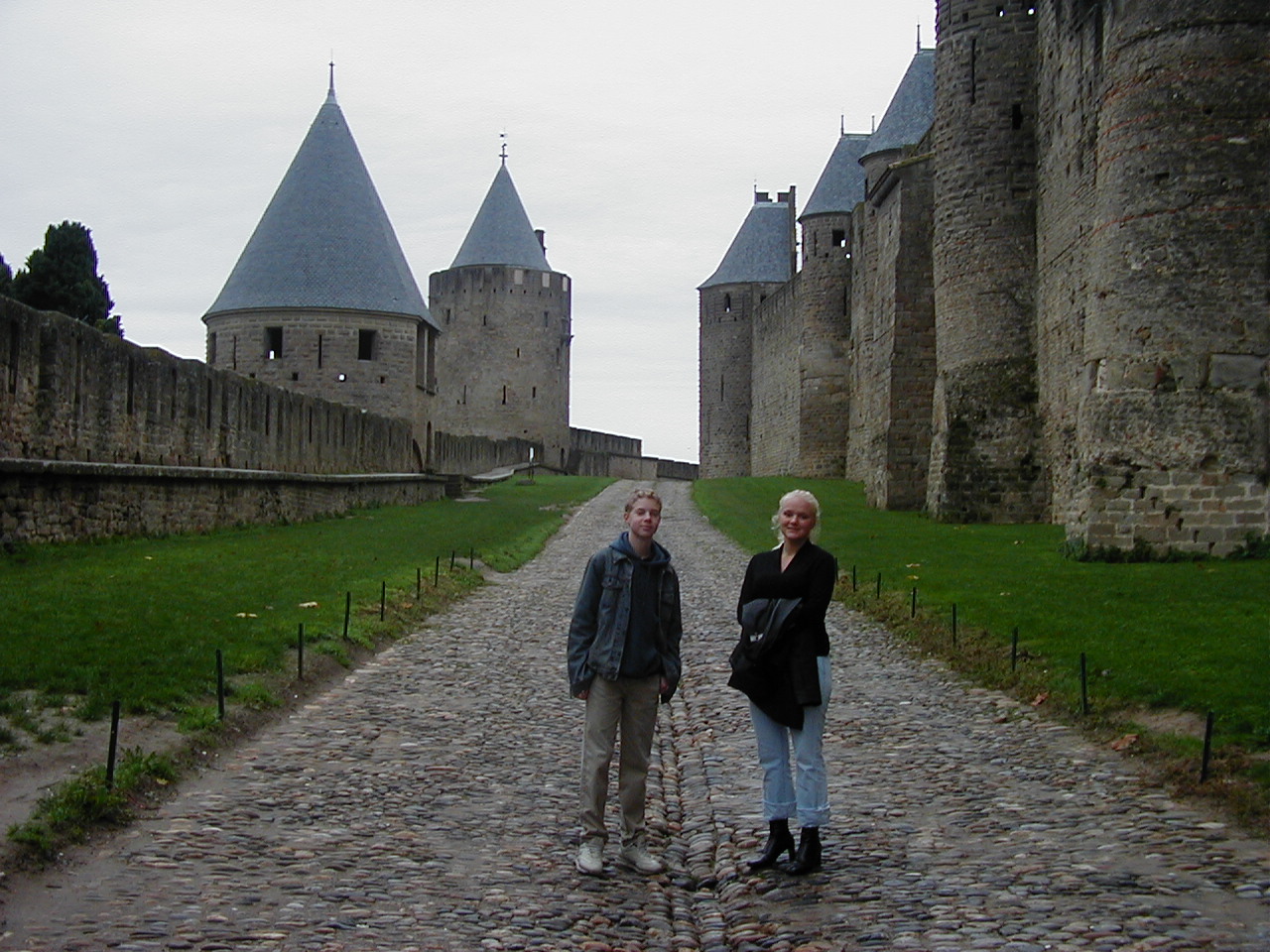
We were glad that we had parked in the city and not in the official visitor car parks not just because there was a parking charge there but because we now had to walk and across the Pont Vieux and the River Aude which was lined with trees that were just beginning their transformation into Autumn colours. This is the best pedestrian approach to La Cité because, set high up on a hill overlooking the river, Carcassonne’s ancient walled city is picture-book perfect and this fairytale collection of drawbridges, towers and atmospheric cobbled streets was reputedly the inspiration for Walt Disney’s ‘The Sleeping Beauty’. This may or may not be true but is also similar to the story of Cinderella’s castle in Segovia in Spain.

A stone statue of Dame Carcas stood at the drawbridge entrance to the city and again, whether she is fact or fiction, this is the legend of Carcassonne. When the Holy Roman Emperor Charlemagne stood before the gates of the city with his rampaging troops, the castle army existed of only one person, Madame Carcas. (Difficult to believe I agree, but I will carry on anyway). Somehow she managed to give the illusion that many men were still on the walls (rather like the movie ‘Home Alone’).


Charlemagne’s plan was to starve out the occupants of the castle and Dame Carcas, rumbling this, threw a pig over the wall, its belly filled with sweet corn to give the impression that it was well fed. Charlemagne was duped and falling for the deception that the castle was both well provisioned and bristling with angry soldiers packed up and left. On witnessing the retreat Madame Carcas triumphantly blew her horn and thus – Carcas sonne. Now this is almost certainly not true and is very similar to the story of the painted oxen during the Hohensalzburg Fortress in Salzburg in Austria but one thing that is true about Carcassonne is that it was used to portray Nottingham Castle in the Kevin Costner film ‘Robin Hood – Prince of Thieves’ and for anyone that has seen the real Nottingham Castle this requires no explanation why.

Carcassonne stood as a fortified city from as far back as Roman times until Napoleon removed it from the list of official national fortifications and it fell into such disrepair that in 1849 the French government decreed that it should be demolished. This prompted an immediate campaign to preserve it as a historical monument and in 1853 restoration work began under the direction of the architect Viollet-le-Duc who repaired the walls and the roofing on the towers and the ramparts. The restoration was strongly criticized during his lifetime for lack of authenticity because recently returning from work in the north of France, he made the error of using slates and restoring the roofs as pointed cones, where local practice was traditionally of tile roofing and low slopes but it is exactly this feature of his restoration that has made Carcassonne such a magical place.

After walking around the outside of the walls we entered the city by a minor entrance and were transported into an alternative world of narrow streets and cobbled alleyways. we were immediately below the flying buttresses and the grotesque gargoyles of the St Nazaire Cathedral, which is a nineteenth century replacement for the original building but still manages to give a realistic medieval impression. We walked around the corkscrew streets and explored the battlements but at €16 each declined to take the Chateaux tour. There are rather too many shops in Carcassonne for my liking but we looked in one or two and puffed our cheeks out in disbelief at the prices and then we compared menu cards in the bars before selecting one that was consistent with our budget where we stopped for a drink.


Wednesday, 28 December 2011

France, Customer Service Improvement and a Car Hire Scam


Earlier in the year we had flown from Stansted Airport to Pula in Croatia and the grotesque behaviour and the appalling lack of manners shown by the airport security staff prompted me to write to the airport to make a formal complaint when we got back home. I often threaten to make complaints and then calm down and forget all about it but not this time. Because of the complete contempt for the customer and the apparent determination to be as rude and ignorant as possible to passengers being processed through the security lines I imagine that quite a lot of other people might have complained as well and I would like to think that all of those complaints collectively did some good because on this occasion there was a completely different experience.

The man that checked the boarding pass actually smiled and wished us a pleasant flight, the woman at the scanning machine purred instead of snarled as she asked for our liquids and furthermore didn’t demand the transfer to a £1 Stansted plastic bag and the man who does the frisking when I set the alarm off actually apologised for the inconvenience of having to carry out the body search. I hope it wasn’t just an extraordinary fluke and that the airport is paying more attention to improving customer service skills and if they are then I for one will say (and I really didn’t think that I ever would) ‘well done Stansted Airport’ it was so much nicer being treated like a human being!

This was my second Ryanair flight to Carcassonne in the south of France as I had been there previously in November 2003 on genuine 1p fares and on that flight I got to sit in a row of seats in front of a television celebrity. My daughter Sally noticed him first and told me that the person behind was the man in the Vauxhall Zafira adverts, I turned and looked and agreed that it certainly looked like him but I argued that it couldn’t possibly be but then I heard him speak to his wife in that perpetually silly comedy voice of his and there was no mistaking that it was indeed Griff Rhys Jones.

Carcassonne is not a big place so we saw Griff several times the next day when we were sightseeing at the castle and the day after that when we sheltering from the rain in an unusually expensive restaurant for me and we had now bumped into each other so many times that he was beginning to recognise me. It was a cosy place with not a lot of room between the tables and he was sitting right next to me. As we had already been on nodding to each other terms for forty-eight hours it seemed rude not to speak so I said hello and we lamented the weather and then, not sure what to say next to a television celebrity, I stupidly asked him what he was doing on a 1p Ryanair flight. He thought about it and then simply said ‘Well, why not?’ and I think that was just about the perfect response.

We were staying in Carcassonne for two nights but we didn’t see him in the evenings because we were in a cut-price Ibis hotel on an edge of town shopping centre and I guess he was staying in a swanky hotel in La Cité because I could think of a lot of reasons why he wouldn’t have wanted to stay at the Ibis regardless of the price. We did see him again on the way back though because he flew back to the UK on the same flight as us.

I didn’t spot anybody famous on this occasion and after the short ninety minute flight we landed at the tiny municipal airport and after clearing customs found the car hire offices. I had booked a car with EconomyCarRentals.com and I was satisfied with the price I was paying but as so often with car rental companies there was going to be a problem. The girl at the National car rental office went through our paperwork and then charged me €65 more than the quoted price. I pointed this out and she explained that this was the correct price and that EconomyCarRentals.com were quoting incorrect rates and that as it was their fault that I could rest assured that they (EconomyCarRentals.com) would refund the difference and that they (National) would arrange for this to be done.

I have been ripped off by car hire companies before so I was not very confident about this but there was nothing that I could do except turn down the car which would have left us with an even bigger problem so I reluctantly agreed to a car hire scam that I hadn’t been the victim of before, took possession of the keys and complained about this all the way to the silver Citroen Picasso that was waiting for us in the car park baking in the warm midday sun.


Carcassonne has changed in eight years – for some reason they have removed the grass and replaced it with limestone chippings – a mistake in my opinion!


Friday, 23 December 2011

Istria 2011, Markets and Fortresses


It was our final morning but today we managed to sleep through the church bells until about eight o’clock and breakfast time and after a leisurely first meal of the day we packed and booked out of the hotel.

We had an early afternoon flight so that gave us the opportunity to drive back to Pula and finish off the sightseeing that we hadn’t yet managed and a final lunch at Orfej restaurant.

After we arrived we parked in the same car park and went out into the town to visit the market that was close by. There was an outside area with rows of colourful pitches with stalls straining under the weight of fruit and vegetables all presented for purchase in an untidy but satisfying way but the best part of the market was the covered building constructed of iron and glass which housed the butchers and the delicatessens and best of all the fishmongers.

Now I always thought that fish was in short or declining supply but you wouldn’t have thought so here. European Union fishing regulations as well as the General Fisheries Commission for the Mediterranean (a division of the Food and Agricultural Organisation of the United Nations consisting of twenty-four counties that either border the Mediterranean Sea or just happen to fish there) do not seem to have had a serious impact on the availability of marine produce in Pula.

The agreed fishing quotas must be very generous indeed because this fish market looked as though someone had sucked up the entire seabed and delivered it right here at this spot. On closer examination of the produce however it soon becomes clear why we have to put up with stock shortages whilst the Croatians, and most of the rest of Europe as well, have such an abundance of choice, we are just far too fussy and our preference for fish is restricted to two or three species that we have fished into a crisis of extinction whilst the Europeans will eat a much greater variety of sea food. We like to buy our fish in little blue polystyrene trays and definitely without heads or tails and ready for the frying pan but here the slabs were brimming with fish so fresh some of it was still alive and flapping about and winking at us as we inspected it.

Excuse me a recollection here but this illustrates my point perfectly; once on holiday with my mother and presented with a menu that included a cod dish she actually asked the waiter if it was served with its head still attached! These things can be two metres long for goodness sake!

There were crabs still frothing at the mouth and octopus with tentacles still writhing and with an eye open daring anyone to buy it and take it home and tackle preparation for cooking. The colours were spectacular too, sparkling silver, gleaming green and radiant reds and trays and trays of vivid orange scampi and other intriguing and colourful crustaceans. One of my personal favourites was some unpleasant looking spiny specimens, which are used as a principal ingredient in a Croatian fish stew called Brodet.

In a separate part of the indoor market the butchers presented their abundant produce in display cabinets and negotiated with customers on cuts and joints for purchase, there were cheese and dairy stalls and fresh pasta and other local delicacies. What I liked was the smell of the whole place. In England supermarkets have no smell at all because everything is over-packaged and presented in plastic trays and vacuum packed containers, which makes shopping a wholly unsatisfactory and sanitised affair.


After the market we made our way to the highest part of the city to the Venetian fortress. We had the place practically to ourselves and we wandered around the battlements and enjoyed the views of the old town and the port that sat below this elevated position. We recognised the stone of course because this had come directly from the amphitheatre that we had visited a couple of days ago. The Museum was interesting but largely unremarkable but there were maritime displays that were close enough to touch and I enjoyed picking up the old ships tools that seemed far too heavy and crude to be of much use in the modern high-tech world.

There was one very interesting room full of exhibits from old ships that you were not allowed to touch and there was adequate signage to make this clear. On a previous visit to Pula, true to form, Kim ignored these precise visitor instructions and just had to reach out and investigate a jar of ships surgeon’s dried semen (I kid you not!). This set an alarm sounding and the immediate appearance of a member of the castle staff to investigate just what we had been up to. I thought that this was very amusing and well worth a photographic memory so I arranged an appropriate pose and was ready to capture the moment when Kim decided to give the moment a touch of authenticity by breaking the alarm beam for a second time. What the…..? Out scuttled the attendant again and this time around I could sense that she didn’t find it so amusing, she was clearly losing her patience so the only sensible thing to do was to leave before Kim broke any more ‘do not touch’ museum rules.

There were no accidents this time and when we had seen all that there was to see we made our way down to the main square for a final drink in the sunshine and then a short walk to the Orfej where we were not disappointed by the final meal that we had been promising ourselves and after an excellent lunch we made our way back to the car and then a short drive to the airport for our return flight.

It had been an excellent four days and we had enjoyed Croatia and Istria. We especially liked Pula and Rovinj, the Konoba Ferral and the Café Orfej, the boat ride with dolphins but most of all we had been delighted to be staying at the hotel Villeta Phasiana and the lovely fishing village of Fažana.


Thursday, 22 December 2011

Istria 2011, Romans and Fascists


It was only mid afternoon and as we had just about exhausted all that there was to do in Fažana without going over the same ground we decided to return to Pula for the afternoon.

Having visited the primary tourist attraction of the city on the first day we walked back to the town centre to see what else we could discover. The town had a slightly uncared for feel with many buildings having a lack of attention to detail in the finishings with drab concrete facades, exposed pipe work and cables that had not been quite tidied up and the first impression was that, compared to Rovinj, this place was a bit shabby and definitely still quite short of money. Looking up we could see bits of masonry looking precariously dislodged and practically disconnected from the buildings and I was sure that there was always an imminent danger of being hit on the head so did my best to make sure that we walked wherever possible in the middle of the street. There were quite a few shops but not many shoppers and the streets were curiously quiet.

We found the Temple of Romae and Augustus in the main town square and the Arch of Sergii, which are some of the town’s best preserved Roman structures and we also came across Agrapinina’s house, which sadly is not. I don’t think Agrapinina was anyone especially important and the remains of her house has been discovered in what is the back yard and garage area of a block of modern apartments. Such a shame really because these looked quite interesting but they were full of litter and there was even some graffiti on the walls. I suppose this is why people like Lord Elgin decide to bring ancient artefacts back to Britain if they are found unloved and uncared for in their original settings.


Instead we walked for a while along what has to be said was a disappointing sea front not least because it was completely devoid of bars for a refreshment stopover. I suppose this is to be expected of course because Pula is not a tourist marina but a fully working shipyard with a lot of activity breaking down old ocean going tankers that were so large there huge bulk overshadowed the adjoining town. In the days of the Austro-Hungarian Empire this was a principal naval base that I am sure would have been familiar to Captain Von Trapp before he was pensioned off and sent off to Salzburg.

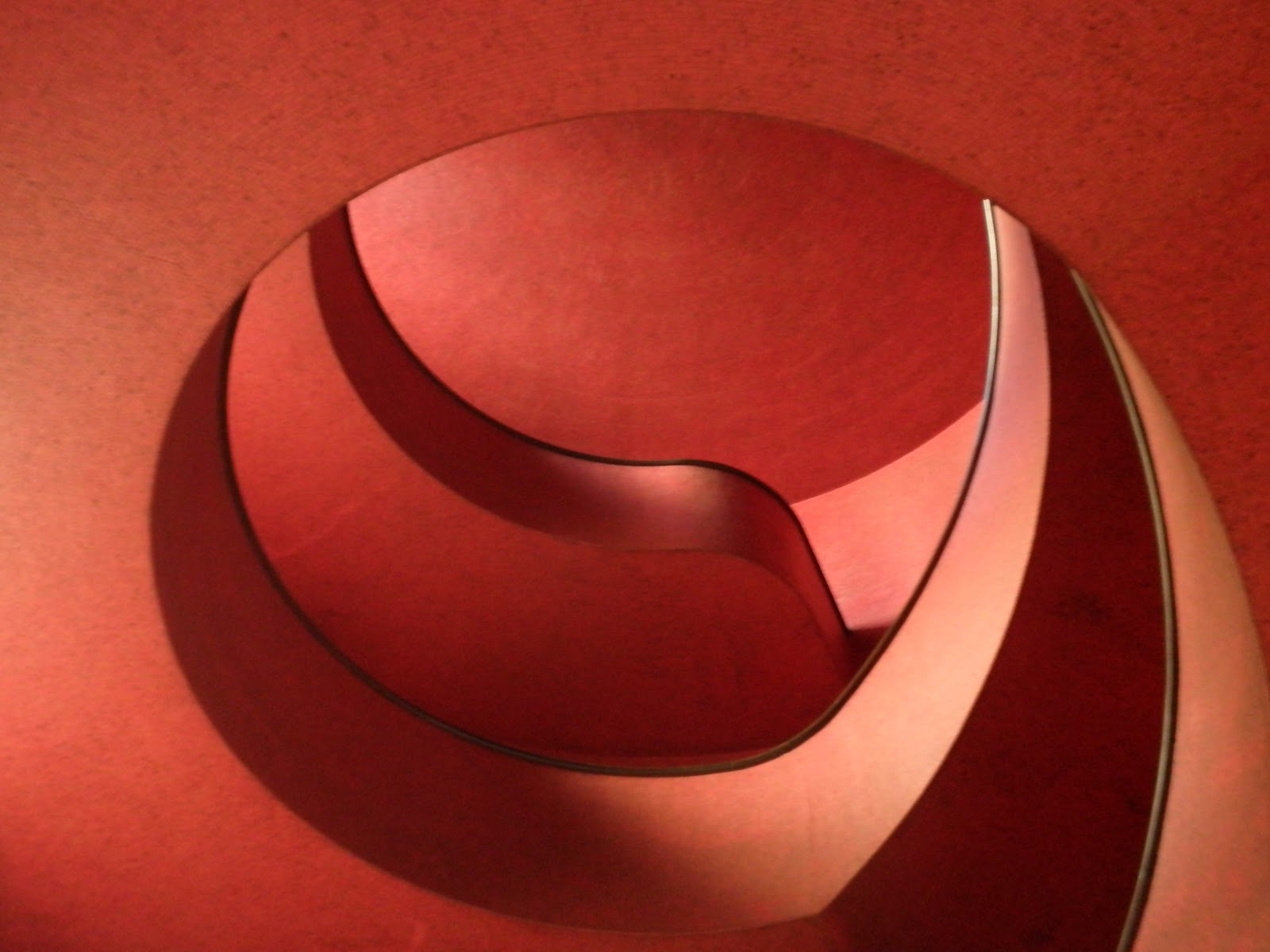
In a more modern part of the city we chanced across a pleasant little square with a water fountain and lined with nineteenth century buildings that had once been the bourgeois commercial centre at the height of the Austrian Empire. In this square was the City Post Office which was a much later twentieth century addition built in 1933 and although unremarkable from the outside had hidden inside a magnificent Gaudi like spiral staircase which rose majestically from the ground floor to the top of the building in an extravagant scarlet sweep that oozed style and grandeur.


The building was designed by Angiolo Mazzoni del Grande who was the chief architect for the Ministry of Communications and for the State Railways under the Mussolini regime in Italy. He was one of the most outstanding Italian architects of the modern period and was responsible for the design of many public buildings and railway stations across Italy that were characteristic of the Fascist building boom. It was an unusual discovery and it would be much better housed in a more important building but this was a hidden gem of Pula and I am glad that we found it.

As the afternoon slipped away we found ourselves back in the main square where we stopped for a drink on the way back to the car and then we left Pula, on this occasion finding the correct route out of town without taking the unnecessary detour and in fifteen minutes we were back at the Konoba Ferral. Ferral, we learned means one of those lights that fishing boats have to attract the fish and in terms of attracting things it certainly worked with us.

Later, after Kim had taken some final magic camera sunset pictures we assembled there again and while we sat there in shirt sleeves a German couple, wrapped up for winter, correctly identified us as English and mad. Actually it wasn’t that cold at all but we did take the precaution of eating inside again. Once more the food was excellent and we enjoyed a sociable meal with a helpful and attentive waiter who guided us expertly through the menu.

It was our last night in Fažana so before we returned to the hotel we took a final night time walk around the harbour and the square. We had enjoyed this place and it would be disappointing to leave in the morning.


Wednesday, 21 December 2011

Istria 2011, A Boat Ride With Dolphins


The next morning the church bells woke me again at six o’clock and after a good night’s sleep I found it impossible to snooze away another hour or so, so knowing that Micky is an early riser and would probably be wandering about the village I decided to dress and go and see if I could find him. There was no sign of him in the streets or the coffee bars and it turned out that just like me the day before he was on early morning shopping mission to buy a new travel kettle to replace the one that Sue and Christine had somehow managed to blow up!

Although it was early there was quite a lot of activity preparing for the day as shops opened, cafés began to set out their tables and chairs and a few people were shuffling towards the bars for a first cup of coffee. In the back streets there were display boards which explained the history and the heritage of the little village which has a fragile economy based on the sea and fishing. Unable to find Micky I walked around the water and out along the harbour wall and all the while the sun was getting higher and warmer and it looked like another good day in prospect.

It was the day of the boat trip but that wasn’t until midday so after breakfast we set off on another walk out of the village but this time in a northerly direction. Not far out of the village we passed through shady pine woods that fringed the stony beach and then came across a camp site that was being prepared for summer visitors and beyond that was an abandoned holiday camp complex where the chalets were in a state of terminal disrepair and with a feel of the 1970s about it I think the kindest thing would be to demolish it entirely.

There was time for a drink now before the boat trip so we sat at our favourite bar and debated whether we had appropriate clothes for a sea going adventure and even though it was warm and the sun was shining we went in turn to the hotel to get some extra layers just in case.

We met Alex as arranged at twelve o’clock and he explained that there would be a short delay as the Capitan (this is how he described the owner of the boat) had been dissatisfied with the quality of last night’s fish catch in Fažana and had had to go to the fish market in Pula to get satisfactory supplies for lunch. We fully understood that because we had seen the catch coming ashore late last night and believe me it was not very impressive!

While we waited Alex explained that he didn’t think he could honour the five for four deal after all but we ignored him and Micky was especially determined that either he would or he would be going over the side later. It turned out to be quite a long wait because having gone to Pula to buy the fish the Capitan then had to cook it and prepare the salad to go with it and then we he finally arrived he had to go to the petrol station to get some fuel but finally after an hour delay we were finally on the boat and heading out to sea.


The boat trip was to be a circumnavigation of the island of Brujini and a scattering of smaller islands in a mini archipelago and as we got closer Alex passed round the home made wine served from a coke bottle and started to begin a narrative of the sights. Brujini was the holiday home of the Yugoslavian President Marshall Tito and today is used by the President of Croatia. On account of this there was a lot of security and a few soldiers but they seemed quite relaxed so I don’t think he was there today.

Alex pointed out the golf course, the President’s mansion, the zoo where a couple of elephants live (apparently) and the hunting grounds all well stocked with game. To be honest after half an hour or so it all became a bit tedious because, quite frankly, one island looked very much like another and the wind was getting stronger and it was beginning to get chilly.

Suddenly however the tedium was broken when Christine spotted something in the water that turned out to be a dolphin and encouraged by the sighting the Capitan went off course and tried to pursue it. It turned out to be two dolphins and although they kept a safe distance from the boat they accompanied us for a while and entertained us by regularly breaking the surface of the water. It isn’t everyday you see dolphins like this, my last time was in Cephalonia in Greece in 2000, and Alex explained that we were lucky because this happened only infrequently on the Capitan’s boat trip.

The sea was a bit rougher now so Alex explained that we wouldn’t be able to stop and eat as planned but the Capitan would take us back closer to Fažana where the sea would be calmer and I for one was glad to be heading back to the mainland. Eventually we stopped and enjoyed a simple meal of fish and chicken with a nice salad and a couple more glasses of the dubious red wine. We finished, fed the scraps to the seagulls and then headed back to the harbour. Alex tried to charge the full rate but Micky was having none of it and after a word with the Capitan the original deal was honoured. It had been a good trip but I was glad to be back on dry land.


Tuesday, 20 December 2011

Istria 2011, Rovinj


It was time for a coffee and a beer and there were plenty of busy harbour side bars to choose from so as we looked for empty spaces Micky reminded me of his theory that if we (the men) made a selection then this would be automatically overruled by Kim who has a curious habit of always walking to the next one perhaps in some sort of belief that it will always be better, or perhaps she just thinks we can’t make a good choice? Micky stopped by an empty table at a perfectly acceptable café and sure enough Kim rejected it and led us instead to the one next door. It was almost identical and the coffee and the beer would be exactly the same so there really was no explanation. Micky smirked!

It was really hot in the midday sun and we sat and watched the harbour activity, the tour groups being led around the town and the children playing in the square. Rovinj was certainly very different to Pula with a chic Italianate ambiance that oozed style and disposable income. Whereas in Pula the tourist part of the city rubs shoulders with the noise and sweat of its industry Rovinj felt exclusively like a pleasure zone for holiday makers, yachtsmen and tourists with no hint of a scruffy industrial area. People in smart clothes parading along the promenade stopping every so often to stop for a sociable drink or to gaze into a shop window with overpriced souvenirs or to buy a couple of scoops of Italian ice cream from the parlours all along the front.

After our refreshment break we walked through the main square and melted into the side streets with the twisting cobbled streets flanked by pastel coloured buildings rising steeply from the pavements with washing lines strung between them and brightly painted shutters on the windows. The route to the top took us a maze of streets until we emerged at the top and in the cathedral square. All but Micky went in for a look around and then we took an alternative path and descended down to the square. On the way we passed a shop selling shell costume jewellery and as Kim examined the necklaces the shop keeper rather sharply said that if we were just looking then we should do it with our eyes not our fingers. We didn’t think this was a very friendly sales technique and if we might have been tempted to purchase something then we certainly wouldn’t be after that.

It was lunch time so we stopped at a water side restaurant advertising a reasonably priced menu of the day so we choose a table ordered some drinks and made our selections. Surprisingly Christine choose fish and I say surprisingly because although she is not so anti-sea food as Sue this was most unusual. And then unsurprisingly she didn’t like it and gave most of it away to Micky in exchange for his meat selection. Over lunch we agreed to take the boat excursion so we phoned Alex and told him that we liked his five for four deal and that we would meet him tomorrow at twelve o’clock.

After lunch we passed from one side of the old town to the other and walked through a market selling local produce and vegetables and then, except for some excitable seagulls, to the quieter side of town, which was less picturesque and home to a large stone monument to Croatian heroes built in the monolithic style much loved by the previous communist regime of Yugoslavia and which looked rather foolishly out of place but very, very permanent.

On the way back to the car the girls stopped for some ice cream and we retraced our steps to the car park. There was no wheel clamp and so we left the delightful town of Rovinj and ignoring the coast road took the direct route back to Fažana.

After a drink at the Konoba Ferral we let the rest of the day just quietly slip away. First we walked south out of the village along a stony beach that arched away in a crescent shape from the village and it was so warm and the sea looked so nice that I went for a paddle in the water but everyone else declined to join me and I have to say that it was a bit cool. Later we enjoyed another spectacular sunset and then being creatures of habit dined once again at the Konoba Ferral and we all enjoyed an excellent second meal where Kim and I shared a special fish plate and Micky, Sue and Christine had beef steak and we all declared our meals to be perfect.


Monday, 19 December 2011

Istria 2011, Palm Sunday and Intermittent Coastal Roads


But that was only until six o’clock the next morning when the peace and quiet amnesty was over and the bells began to ring again and through a half slumber I counted the strikes and satisfied that it was still only early dozed on and off between the quarter hours until it was time to get up.

The day started with a crisis because during the over-zealous search routine at Stansted airport Kim had lost her hair brush and didn’t feel able to tackle the day with only the use of the hotel complimentary comb and I was dispatched to try and buy a replacement. At eight o’clock on a Sunday morning I wasn’t terribly optimistic but to my surprise there was a small shop open in one of the side streets and although it wasn’t a state of the art styling brush they had something that would suffice for a couple of days so I purchased it and returned.

It was a glorious start to the day with the sun flooding into the village square, making the water sparkle like thousands of tiny diamonds and the brightly painted boats shine in the reflected light. There was a good breakfast at the hotel and without many guests it was all for us. Despite the reliable early good weather Croatia has a compressed holiday high season from late June to mid September so the hotel was virtually empty except for us.

Being a week before Easter it was Palm Sunday, the day the Catholic Church, celebrates Christ’s entry into Jerusalem and on account of this there was a lot of activity in the square outside the church as more and more people began to assemble. Some had traditional palm leaves but it seemed that almost any sort of vegetation was acceptable and there were a lot of palm substitutes being carried. Soon it seemed the entire village was assembled outside the church and at half past nine they formed into a procession and set off to parade through the streets. It took them about fifteen minutes and then they began to file back into the square and into the church. There were so many people that only those at the front of the parade could make it inside so those at the back had to stand in the pleasant sunshine and listen to the service through loudspeakers attached to the front of the church.

Our plan today was to drive north along the coast to Rovinj and possibly Poreč but we would see how the day went before committing to both. The map seemed to suggest two alternative routes. One was a main road, possibly even a motorway, and so, with my paranoid nervousness about toll roads, we selected what appeared to be a perfectly good coastal route that would take us through a succession of villages along the way.

In theory it was a good idea but some of the roads that the map suggested were actually not really roads at all and in between villages the tarmac often ran out only to be replaced by a deeply rutted track that was completely unsuitable for our little car. Added to this was the inadequacy of the road signs that would regularly disappear leaving us to guess the direction of travel. The result of this was that we were forced to stop a couple of times and turn around and try again and after an hour or so we travelled inland from the intermittent coast road and came to the main road which wasn’t a toll after all and would have been the far better option in the first place.

As time was getting on we abandoned the idea of driving to Poreč and drove straight to Rovinj where we arrived late in the morning. The town was very busy so it took a while to find a parking spot and then some more time to understand the car park fees. It was free on Sunday but I needed to reassure myself completely about this because I didn’t want to get back to a wheel clamp.

The car park was next to the marina just south of the old town and as we walked past the boat repair yards and nautical shops there was a good view of old Rovinj. Like a lot of other Croatian Adriatic places such as Primosten and Trogir the original town was built on an island with a natural moat for protection so the town jutted out into the sea with layer upon layer of buildings crammed around the outside and rising up to a cathedral on the top. The moat has long been filled in and the town has spread onto what was the mainland and we walked around a busy harbour full of pleasure boats and towards the busy main squares.


Sunday, 18 December 2011

Istria 2011, Fažana


Pula is the largest city in Istria so I suppose it was inevitable that we would get lost leaving the place. In theory it should have been easy to pick up the coast road and drive the short distance to Fažana but after fifteen minutes or so it was obvious that we were going in the wrong direction, away from the coast and driving into the hills of the peninsula.

Istria derives its name from the its first known settlers , the ancient Illyrian tribe of the Histri, who arrived there in the early bronze age who were the first to use the geographical advantages of the peninsula to establish trade routes and develop commerce. Istria’s privileged position was however to become its burden as one by one other, more powerful and aggressive neighbours moved in to take control and take advantage of the trading and strategic military advantages that it offered. First the Romans, then Byzantium and after that Slavic tribes from the east and over the following centuries Istria was governed by the Franks, the Venetian Empire, the Hapsburgs, Austria and in the early twentieth century by Fascist Italy. It was later absorbed into Yugoslavia and following its break up divided by modern day Slovenia and Croatia.

Once we had realised our (my) mistake we corrected it quite easily and as we were in an elevated position we could see a road that led to the coast and although there were no signposts to help we trusted to luck and set off west. We were right and soon we were in Fažana and after parking the car next to the sea we went to find our hotel, the Villeta Phasiana which turned out to be ideally located in a small square right next to the harbour.

After the girls had enjoyed their first speciality ice cream we moved the car to the designated car park and walked the short distance to the hotel where we booked into some simple but stylishly furnished rooms with a good view over the square, the harbour and the sea.

We stayed long enough to unpack and untidy the perfectly presented rooms and then we assembled back outside to explore the village and enjoy the late afternoon sunshine. The hotel was in a perfect position right at the centre of the pretty little village and we took a stroll along the seafront to examine the restaurants for later on. We hadn’t got very far when a tall man with a dog spotted us as tourists and launched into a sales pitch for a boat ride around the islands for the next day or the day after. He told us his name was Alex and a trip with lunch was two hundred Kuna (about £15 each), Micky offered him a deal which he declined so we said we would think about it and he left us his mobile phone number.

We didn’t walk to far and quickly returned to a harbour side bar/restaurant called the Konoba Feral where we sat out of the wind that was getting stronger and had a couple of drinks and thoughts began to turn to evening meal. Back at the hotel the helpful receptionist recommended the Feral for food and as it wasn’t far to walk we agreed that we would take her advice.

In the sky the late sun and some occasional clouds were beginning to assemble into an impressive sunset ensemble and with Kim’s magic camera (if you remember, it can capture a sunset even if there isn’t one) it seemed certain that we would be able to get some good pictures. Micky and I met first and after taking the pictures we took an outside seat at the tavern and over a beer we approved the menu by making sure that there were not too many slippery things from the ocean on it and there were some suitably plain alternatives for Sue and Christine and having satisfied ourselves that it was alright we sat and waited for the others to join us.

It was an excellent choice and the food was perfect. Micky had steak, the girls had spaghetti and Kim and I had a scampi buzura which is Adriatic prawns in a pasta sauce which was a bit messy to eat but tasted divine. We had chosen well and it was an excellent meal and after good food and wine we ended a long day with the short walk back to the Villeta Phasiana. Opposite the hotel was the village church which regularly chimed the hours from the campanile bell tower and we worried about that, especially after we discovered complimentary ear plugs in the bed side cabinet but we needn’t have concerned ourselves because at eleven o’clock they stopped and a pleasant peace and quiet descended on the village.


Friday, 16 December 2011

Istria 2011, The Roman Amphitheatre at Pula


The airport is only about eight kilometres outside of the city so once we had completed the hire car formalities and had squeezed ourselves and our luggage into the silver Hyundai Getz (not the Skoda Fabia that we had ordered) we set off towards Pula where we arrived just a few minutes later and found a convenient car park directly below the Roman amphitheatre and close to the busy docks.

The first century amphitheatre is the most important and most impressive building in Pula because it is the sixth largest in the world and one of the best preserved examples of its kind. The Coliseum in Rome was the biggest Roman amphitheatre and could seat a massive fifty-thousand spectators (Some estimates suggest eighty thousand but generally about fifty thousand is the agreed capacity of the stadium), the second largest was Capua, also in Italy but now sadly in ruin, which had only a slightly smaller capacity, and the third was in El Djem in Tunisia with a capacity of thirty-five thousand. The amphitheatre in Pula was designed for about twenty-five thousand and there were similar sized stadiums in Verona in Italy and at Nimes and Arles in Southern France so this was more of a Championship rather than a Premiership Ground.

We walked around the external walls and I was immediately struck by the grandeur and magnificence of the building. I have been to Rome and seen the Coliseum and in my opinion nothing can compare with that but this building made that assessment a close run thing. It towered mightily above us, the white stone walls reaching up into the clear blue sky and looking proud and strong.

As it was about lunchtime we decided to postpone the visit to the inside until the afternoon and we walked towards the city centre to look for somewhere to eat. We had stayed in Pula before so we knew where we were going, or at least we thought we did but confused by the busy streets we took a few wrong turns looking for a bar that we had enjoyed before. Down at the waterside the city isn’t particularly interesting or picturesque and we walked along a harbour that was fronted with bleak marine associated offices and was sadly without bars and cafés, but things improved as we walked back from the dockside and into main town street behind and eventually came to the main square with plenty of bars to choose from so we sat on the sunny side of the square and ordered drinks.

This has been Pula’s main square for a long time because in one corner, close to where we were sitting was the two thousand year old Roman Temple of Augustus which was in surprisingly good shape for all its years. It was hot now and the sun was trapped in the square and the heat intesified as it bounced off the white walls and pavements made of dazzling Istrian stone.


Istrian stone was quarried in the hills behind the coast and was much valued by the Romans and later the Venetians who, in the middle ages, controlled the quarries and transported thousands of tonnes to Venice to build the state buildings there. It is a limestone that is so dense that it resembles the finest marble and it was perfect for building columns and monuments because it could be quarried in exceptionally thick strata.

After the short break we left the square and quickly found the Café Orfej still advertising very reasonably priced meals. That appealed to us all so we went inside and made an attempt at translating the menu and finding that we didn’t have much trouble with pizzas we had a fine lunch and a couple of beers.

After lunch we walked back through the sunshine to the amphitheatre, this time to pay our entrance fee of forty Kuna and to go inside the impressive structure. There are over two hundred surviving Roman amphitheatres across what was the Roman Empire and this is one of the best to see because this is the only one that has its entire external structure rising to three levels still intact. There is still a lot missing however as parts of it had been dismantled over the years to provide ready prepared paving for roads and a convenient supply of building materials for later construction projects such as the town’s Venetian fortress built nearby. Thankfully most of the vandalism was restricted to the internal seating and terracing and the external walls with their towering arches are still left in place to see today.

The amphitheatre was built on sloping ground so that the part facing the sea has three levels and the other side facing the land has two. The great plinths which form the base are visible, along with two orders of arches divided by pilasters and an attic of rectangular windows. When it was in use large beams supported awnings which protected the spectators from the sun or the rain. Four towers around the perimeter had cisterns containing perfumed water that could be sprinkled on the crowd because the smell of animals, blood and fear must have been rather distressing even for a blood-thirsty mob. Under the fifteen entrances was a ditch served by elevators for beasts, people and stage sets to be moved easily about.

The amphitheatre was part of the primary gladiator circuit and remained in use until the fifth century and in that time it is impossible to imagine how many men and animals died in this place. Underneath the arena there is a small museum housed in the underground corridors where exotic animals and gladiators waited their turn to be raised to the stadium for their part in the bloody show and one can only try to imagine what a brutal and thoroughly unpleasant place this might once have been.

It was late afternoon now so having completed our tour of the amphitheatre and the underground museum we agreed that it was time to leave and drive to our hotel which was in the nearby fishing village of Fažana.